
Understanding the PNG Shift
India is actively expanding its natural gas pipeline network, a strategic move aiming to reduce reliance on a single fuel source and encourage the adoption
of Piped Natural Gas (PNG). Recent directives from the Ministry of Petroleum and Natural Gas indicate that households with access to PNG infrastructure will be required to transition away from Liquefied Petroleum Gas (LPG) within three months. Failure to comply with this mandate, despite PNG availability, may result in the cessation of LPG supply. This initiative is particularly relevant in the current global climate, where geopolitical events have highlighted concerns regarding energy supply chain stability. India's substantial import of LPG, with a significant portion transiting through sensitive maritime routes, underscores the importance of diversifying energy sources and promoting more secure domestic options like PNG.
What is PNG?
Piped Natural Gas (PNG) offers a distinct advantage over traditional LPG cylinders by delivering fuel directly to your home through a network of underground pipelines. This eliminates the need for storage at the consumer's end and the recurring task of cylinder replacements. Composed primarily of methane, PNG is recognized for its cleaner combustion properties, burning almost completely and thereby presenting a more environmentally conscious energy solution for domestic use. The convenience of a continuous supply, without the worry of running out or managing cylinder exchanges, is a significant benefit for households.
Availing Your PNG Connection
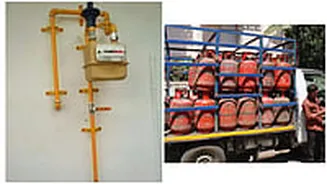
Securing a Piped Natural Gas (PNG) connection is a straightforward process managed by the Petroleum and Natural Gas Regulatory Board (PNGRB). Prospective users typically begin by completing a registration form. Following submission, the next steps involve Know Your Customer (KYC) verification and the payment of applicable charges. Upon successful verification and payment, each consumer is assigned a unique Business Partner (BP) Number, a system-generated identifier crucial for account management. Subsequently, the authorized service provider will install the necessary infrastructure at your residence, which includes the gas pipeline, a meter to measure consumption, safety valves, and a regulator. Once the installation is complete, you will enjoy an uninterrupted supply of natural gas for your cooking and other domestic energy needs. The entire process from application to operational connection usually takes up to three months.
Costs and Application Channels
The overall cost for a PNG connection comprises a refundable, interest-free security deposit intended to cover the equipment and infrastructure, alongside charges for the last-mile installation. For a standard domestic setup, this total amount generally does not exceed ₹6,000. However, if a smart meter is opted for instead of a conventional one, the security deposit can be increased up to ₹9,000. City Gas Distribution (CGD) companies facilitate applications through various convenient channels, including email, dedicated customer portals, physical letters, or customer service call centers. Major providers such as Indraprastha Gas Limited, Mahanagar Gas Limited, GAIL (India) Limited, and Bharat Petroleum Corporation Limited offer these services. It's important to note that upon obtaining a PNG connection, access to an LPG connection will no longer be provided.
PNG vs. LPG: Key Differences
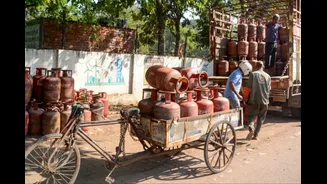
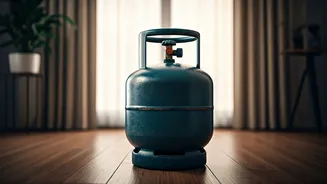
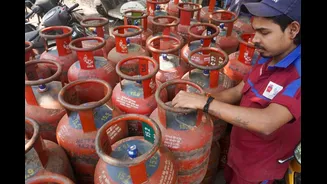
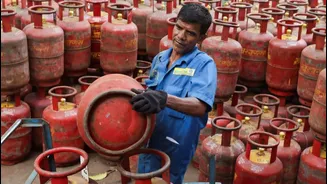
The fundamental distinction between PNG and LPG lies in their delivery and storage methods. LPG is supplied in pressurized cylinders through a distribution network, requiring storage at the consumer's premises. PNG, conversely, is delivered continuously via underground pipelines directly to homes, eliminating the need for on-site storage. Chemically, PNG is predominantly methane and is distributed at low pressure; in the event of a leak, its lighter-than-air composition causes it to disperse upwards. LPG, composed mainly of propane and butane, is stored in a liquid state under pressure within cylinders. The infrastructure for PNG involves direct pipeline connections to the kitchen, whereas LPG relies on cylinder exchanges and regulator attachments.