





Mission Overview
The PSLV-C62 mission, spearheaded by ISRO, was a crucial endeavor in India's space program. It involved the launch of a Polar Satellite Launch Vehicle
(PSLV), known for its reliability and versatility. The primary objective of this mission, like its predecessors, centered on placing various satellites into orbit. These satellites served diverse purposes, ranging from Earth observation and remote sensing to scientific research and technological demonstrations. PSLV's modular design allowed it to cater to a range of payloads, making it an adaptable choice for diverse space missions. The mission's success further solidified ISRO's reputation as a leader in space technology and its commitment to advancing India's scientific capabilities on a global scale.
PSLV: The Workhorse
The PSLV is a four-stage launch vehicle, a workhorse for ISRO, designed for delivering payloads into various orbits. The first stage of the PSLV typically utilizes a solid rocket motor. The second and fourth stages use liquid propellant, while the third stage also uses a solid rocket motor. This combination allows for precise control and efficiency in reaching different orbital heights and inclinations. The PSLV's design allows it to carry a range of payloads, from small satellites to larger ones. The reliability of the PSLV has made it a preferred choice for numerous ISRO missions and for launching satellites for international customers, showcasing India's prowess in space technology. ISRO has consistently upgraded and improved the PSLV, enhancing its performance and capabilities over the years.
Payloads and Objectives
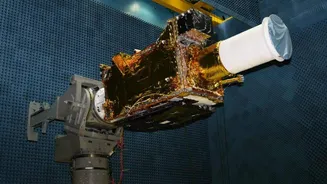
The payloads onboard the PSLV-C62 mission are of prime importance. These can be Earth observation satellites, allowing for detailed imaging of the planet. These also include satellites designed for scientific experiments, gathering valuable data on the space environment or other celestial bodies. Further, the mission incorporated technology demonstration satellites, which are crucial for testing new technologies. These payloads contribute to diverse areas like climate monitoring, resource management, disaster prediction, and communications. The specific objectives varied depending on the satellites included in the mission. The launch of these payloads contributes to national development and scientific advancement, helping India to keep growing and enhancing its space capabilities.
Significance of the Launch
The PSLV-C62 mission holds substantial significance for India's space program. Each successful launch contributes to ISRO's experience and expertise, boosting its reputation globally. The data collected from the satellites improves our understanding of the Earth and the universe. Furthermore, the advancements in launch technology and satellite design enhance the nation's scientific capabilities. The missions often drive economic growth by generating opportunities for the space industry, encouraging innovation and creating jobs. The mission's success strengthens India's self-reliance in space technology and enhances its capacity to tackle complex challenges, driving future exploration endeavors.
Impact and Future
The PSLV-C62 mission has lasting impacts that stretch into the future. The data collected by the satellites provides essential information for environmental monitoring, helping in weather forecasting and climate research. This information is vital for sustainable development and in tackling climate change. ISRO consistently builds on each mission's successes. Future plans include more advanced launch vehicles, bigger payloads, and ambitious projects like crewed missions. Through these missions, India seeks to strengthen its place in the global space community, expanding its scientific, technological, and economic horizons. The ongoing work of ISRO will propel India into a leading space-faring nation, opening up new opportunities for innovation and growth.