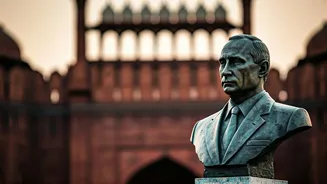

Putin's India Trip
President Vladimir Putin's visit to India was a significant event, drawing attention to the developing relationship between the two nations. During this
period, India was experiencing internal complexities alongside its efforts to maintain its international stance. The visit occurred amidst a backdrop of discussions and negotiations regarding various strategic and economic partnerships, reflecting India’s foreign policy objectives. Political analysts observed the visit closely, trying to find out the implications for future engagements. This visit served as a platform for strengthening diplomatic ties and discussing crucial global issues, indicating the evolving dynamics between India and Russia in a changing world order. The visit included meetings with Indian leaders to enhance collaboration across different sectors like defense, energy, and trade, reinforcing their commitment to a long-term partnership.
Babri Masjid Controversy
The Babri Masjid controversy was a significant and contentious issue during this time. The dispute revolved around the demolition of the Babri Masjid in Ayodhya, which triggered widespread protests and communal tensions across India. The incident led to extensive debates and litigations, influencing the political and social climate significantly. The matter involved historical claims and religious sentiments, which were central to the controversy. It caused a considerable political impact, with various political parties taking distinct stances. The events and their outcomes had long-lasting repercussions on community relations, shaping the political narrative for years to come. This period was marked by legal battles and social unrest. Different groups made claims that often led to heightened tensions and the need for government intervention to restore order and address the underlying causes of the conflict.
Key Global Events
During President Putin’s visit, several significant events were occurring globally. The international community grappled with various diplomatic and geopolitical challenges, including discussions surrounding trade, security, and global cooperation. There were shifts in the balance of power, with various alliances and partnerships being re-evaluated. Significant economic and political negotiations were underway, involving many major world powers, affecting trade agreements. Discussions centered on various pressing global matters, such as the environment and human rights. These events created a dynamic and complex environment in which India and Russia had to navigate their diplomatic and economic strategies. These events highlighted the interdependencies between nations. They significantly impacted international relations and played a key role in influencing India's and Russia's bilateral relations and global strategies.
Rajghat Visit
President Putin's visit to Rajghat was a symbolic gesture, reflecting respect for India's history and heritage. Rajghat, the memorial of Mahatma Gandhi, is a place of national importance, and Putin's visit was a diplomatic signal. It reflected India’s efforts to strengthen diplomatic ties, demonstrating their shared values, and mutual respect. The visit also underscored the importance of cultural diplomacy, using symbolic gestures to enhance mutual understanding. The decision to visit such a place reflects a strategic approach, as it emphasizes shared historical values. It also strengthens the bond between both nations. The event showcased the importance of diplomatic protocols.
Unnoticed Aspects
During Putin's visit, several aspects may have gone unnoticed by the public. One of these aspects includes the security protocols. High-level visits often involve intricate security measures to protect the visiting dignitaries. Details of behind-the-scenes meetings and discussions also are often private. Protocol and diplomatic discussions between officials were crucial aspects of the visit. It may have involved conversations about upcoming agreements, future collaborations, and strategies for navigating complex global issues. Such engagements are central to fostering understanding. Therefore, the visit included many elements beyond the public view. It is important to acknowledge such nuanced aspects that highlight the complexities of these state visits.







![[WATCH] T20 World Cup 2026: Gautam Gambhir hosts dinner for Team India players ahead of Namibia clash](https://g-mob.glance-cdn.com/public/fc/image/7gXS1xdhs5Q0.webp)