







Pioneering Space Mission
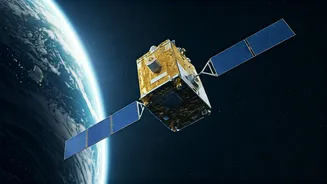
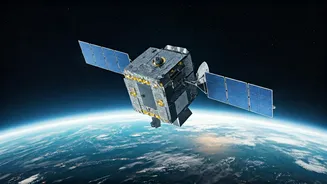
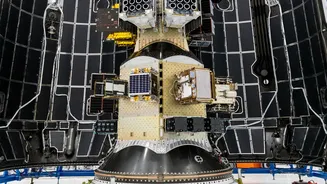
A significant stride for India's burgeoning private space industry has been marked by the successful deployment of GalaxEye's Mission Drishti satellite.
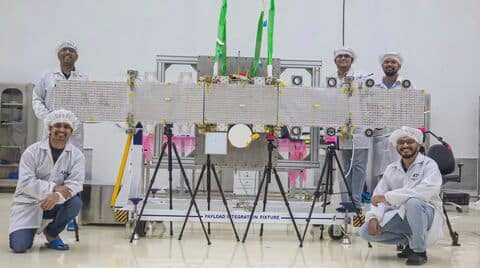
This ambitious endeavor, launched from California aboard a SpaceX Falcon 9 rocket, represents a major milestone for the Bengaluru-based startup. Prime Minister Narendra Modi lauded the achievement, highlighting it as a testament to India's growing innovation ecosystem and the passion of its youth driving national progress and technological advancement. The mission itself is particularly noteworthy for being the world's first OptoSAR satellite and the largest satellite privately constructed in India. The Prime Minister's acknowledgement extended to the founders and the entire team responsible for this remarkable feat, emphasizing its importance in the nation's ongoing space exploration narrative. The launch underscores the increasing capability and ambition within India's private space ventures, signaling a new era of innovation and development.
Innovative OptoSAR Technology
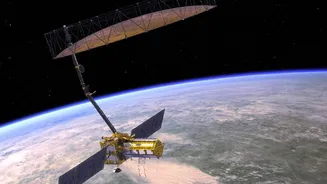
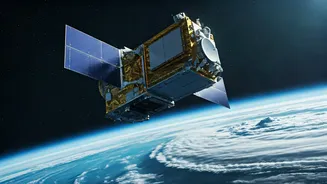
Mission Drishti distinguishes itself through its pioneering OptoSAR (Optical and Synthetic Aperture Radar) system, an integration of electro-optical (EO) and SAR technologies onto a single satellite platform. This unique combination aims to overcome the inherent limitations of traditional Earth observation methods. EO sensors excel at capturing high-resolution imagery during daylight and clear atmospheric conditions, providing visual detail. Conversely, SAR technology utilizes radar signals to penetrate cloud cover and darkness, enabling imaging regardless of weather or time of day. By merging these complementary capabilities, GalaxEye seeks to ensure more consistent and reliable data acquisition, offering a comprehensive view of the Earth's surface that is less susceptible to environmental variables. This dual-sensor approach is expected to significantly enhance the utility and dependability of Earth observation data for a wide array of applications.
Impactful Applications & Future
The data generated by Mission Drishti is poised to offer substantial benefits across numerous critical sectors. Its capabilities are particularly valuable for defense applications, providing enhanced surveillance and intelligence gathering. In agriculture, it can aid in crop monitoring and yield prediction. For disaster response, it offers crucial real-time information for assessment and relief efforts. Maritime monitoring will be improved, enabling better tracking of vessels and environmental changes. Furthermore, the satellite will support infrastructure planning by providing detailed topographical and surface information. This mission is also designed to complement and enhance India's existing Earth observation infrastructure, including the extensive satellite network managed by ISRO. Looking ahead, GalaxEye has ambitious plans to expand this system into a constellation of 10 satellites by 2030, with the ultimate goal of establishing a more robust and self-reliant Earth observation capability for India.
Global Recognition
The significance of Mission Drishti's launch extended beyond national borders, garnering attention from international figures in the tech industry. Notably, prominent tech billionaire Elon Musk acknowledged the achievement by posting a congratulatory message. His simple yet impactful "Congratulations" accompanied by the Indian flag emoji signified his recognition of India's progress in space technology. This endorsement from a global innovator like Musk highlights the growing international appreciation for India's advancements in the space sector, particularly within the private domain. It underscores that India's contributions are not only impactful domestically but are also being observed and valued on the world stage, further validating the efforts of startups like GalaxEye and the nation's broader space aspirations.