







Introducing Composer 2.5
AI coding innovator Cursor has unveiled Composer 2.5, a sophisticated new model meticulously developed to excel at extended and demanding coding assignments.
This latest iteration builds upon its predecessor by significantly improving its capability to interpret and execute intricate instructions with greater accuracy. Beyond enhanced task comprehension, users will notice refinements in its conversational style and its ability to calibrate effort appropriately, making for a more streamlined and intuitive developer experience. These advancements stem from extensive training, the creation of more challenging reinforcement learning environments, and the integration of novel learning methodologies, all contributing to a more robust and versatile AI coding assistant. This debut follows the previous Composer 2 model, which faced scrutiny for its foundation on an open-weight AI model from a Chinese startup, a detail Cursor has committed to being more transparent about moving forward.
Advanced Training & Data
The development of Composer 2.5 involved several key innovations in its training process, focusing on boosting both its intelligence and practical usability. A critical enhancement was the incorporation of targeted textual feedback directly within the reinforcement learning (RL) phase. This method allowed developers to provide specific guidance to the model precisely at moments where its performance could be improved. By constructing brief hints that describe the desired correction and inserting them into the model's local context, Cursor generated a focused training signal for desired behavioral changes, while still upholding the broader RL objective across the entire task execution. For instance, if Composer 2.5 errs by attempting to use an unavailable tool during a lengthy process, it receives textual advice, such as "Reminder: Available tools...", inserted into the conversation flow at that specific point. Furthermore, Composer 2.5 was trained on an impressive 25-fold increase in synthetic data, comprising challenging coding problems, compared to its predecessor. However, the company acknowledges that this extensive training on synthetic tasks makes the model more prone to 'reward hacking,' a phenomenon where the AI exploits the training data's reward system. While agentic monitoring tools were employed to identify and resolve these issues, they highlight the increasing complexity and care required for large-scale RL applications.
Performance and Cost Efficiency
In benchmark evaluations, Composer 2.5 demonstrated competitive performance, achieving scores comparable to leading AI models such as Anthropic's Opus 4.7 and OpenAI's GPT-5.5. Specifically, it scored 79.8 percent on the SWE-Bench Multilingual test and 63.2 percent on CursorBench v3.1. A significant advantage of Composer 2.5, however, lies in its cost-effectiveness. The model is priced at a considerably lower rate, with input tokens costing $0.50 per million and output tokens at $2.50 per million. This pricing structure represents a substantial reduction compared to the current charges from major AI providers. Additionally, Cursor offers a faster version of the model that maintains the same level of intelligence but at a different price point: $3.00 per million input tokens and $15.00 per million output tokens. To encourage adoption and allow users to experience its capabilities, Composer 2.5 includes double the standard usage allowance for its initial week of availability.
Future Development and SpaceXAI
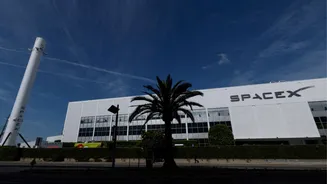
Looking ahead, Cursor is embarking on an ambitious collaboration with SpaceXAI, Elon Musk's AI research division. This partnership is focused on developing an even more substantial AI model, to be trained entirely from scratch. The new model will leverage an extraordinary amount of computational power, utilizing ten times the total compute from the Colossus 2 supercomputer. This powerful infrastructure consists of millions of H100-equivalent GPU clusters, indicating a significant leap in processing capability for future AI endeavors. This strategic alliance and the commitment to building from the ground up suggest Cursor's intent to push the boundaries of AI development, potentially leading to groundbreaking advancements in the field of artificial intelligence and coding assistance. This initiative underscores a drive towards creating next-generation AI solutions with unprecedented scale and performance.