







UP's Red Alert Districts
The India Meteorological Department (IMD) has raised a significant alarm across parts of Uttar Pradesh, specifically issuing a red alert for four key districts:
Banda, Prayagraj, Chitrakoot, and Kaushambi. This severe heatwave declaration signals extremely high temperatures and necessitates urgent action and precautions. The situation is dire, with Banda recording an alarming 48 degrees Celsius on Wednesday, making it the hottest location in the country. Prayagraj followed closely with 46.4 degrees Celsius, while Hamirpur reached 46.2 degrees Celsius and Jhansi registered 45.9 degrees Celsius. Temperatures in numerous other districts, including Aligarh, Varanasi, and Hardoi, have also surpassed the 43 degrees Celsius mark, indicating a widespread and intense heat event affecting a large population within the state.
Delhi's Orange Alert
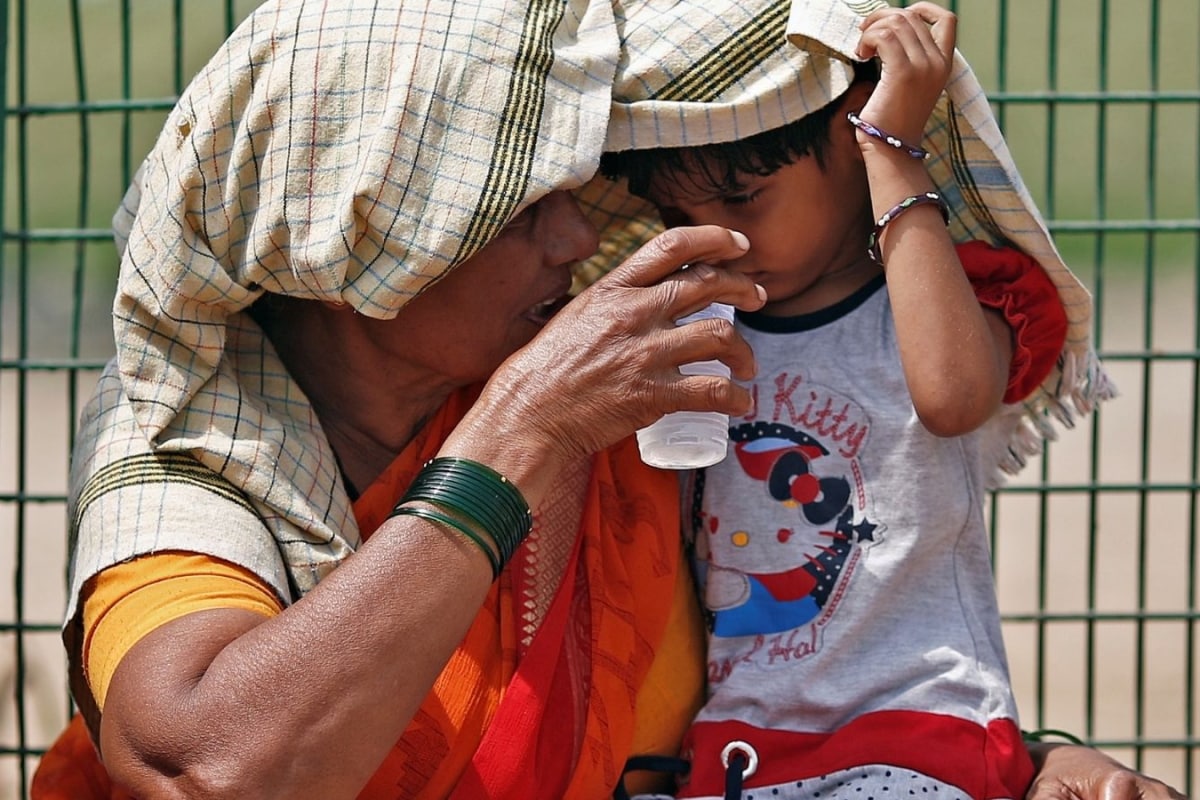
In tandem with the extreme conditions in Uttar Pradesh, the national capital, Delhi, is also grappling with intense heat. The IMD has placed Delhi on an orange alert, urging residents to exercise caution as the city experiences significant heatwave conditions. The forecast for Delhi includes persistent high temperatures and uncomfortably warm nights throughout the week. Adding to the concern, Delhi has already reported its first cases of heatstroke. A 24-year-old man, found unconscious on a train, was admitted to Dr. Ram Manohar Lohia (RML) Hospital and remains in critical condition. Doctors emphasize that heatstroke is a life-threatening condition and urge the public to stay hydrated and take necessary preventive measures, especially during this alert period. A second heatstroke case involving a 50-year-old man, also admitted in an unconscious state with extremely high body temperature, further underscores the severity of the current weather situation in the capital.
Contributing Weather Factors
The current scorching heatwave conditions across Uttar Pradesh are being exacerbated by a confluence of meteorological factors. According to the IMD's Lucknow office, the absence of any active weather systems that could bring relief, combined with clear skies leading to enhanced radiational heating, is a primary cause. Furthermore, the subsidence of hot winds, a phenomenon associated with an anticyclone situated over central India, is actively contributing to the elevated temperatures. This lack of atmospheric disturbance and the prevailing dry weather are expected to persist, with the forecast indicating continued dry conditions throughout the state and the unfortunate accompaniment of warm nights. These dry winds and intense solar radiation are creating a perfect storm for record-breaking temperatures.
Broader Heatwave Impact
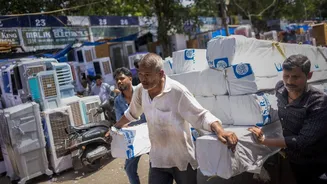
The extreme heat is not confined solely to Uttar Pradesh and Delhi; numerous other states across India are also experiencing significantly high temperatures. The IMD's advisories extend beyond the general public, offering crucial guidance to farmers and livestock owners to protect their livelihoods and animals from the harsh conditions. For the general population, essential precautions include staying well-hydrated by drinking plenty of water, and wearing light-colored, loose-fitting clothing to minimize heat absorption. The prolonged and severe nature of this heatwave necessitates widespread awareness and adherence to safety guidelines to prevent heat-related illnesses and minimize adverse impacts on health and daily life.