


The Celestial Gathering
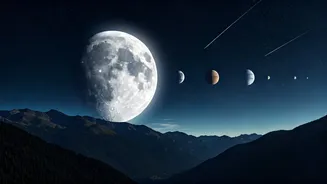
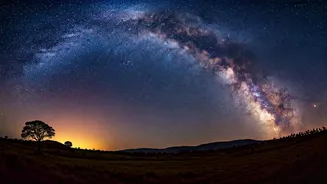
February 2026 is set to enchant stargazers with a remarkable celestial phenomenon, often referred to as a "planet parade" or a "rare planetary alignment."
This captivating event brings several planets into prominence in the sky shortly after sunset, inviting everyone to experience the wonder of our solar system. While similar gatherings have occurred, this particular alignment focuses on a specific lineup of planets. The concept of a planet parade has gained significant traction recently, joining other popular astronomical events like meteor showers and supermoons in capturing public imagination. This recurring interest highlights humanity's innate fascination with the cosmos and the desire to witness these grand cosmic arrangements with our own eyes.
Observing the Alignment
The most opportune moment for this celestial spectacle is Saturday, February 28, 2026. As twilight fades, an impressive six planets – Mercury, Venus, Saturn, Jupiter, Uranus, and Neptune – will be visible in the western sky. However, astronomers emphasize that 'seeing' all of them requires careful consideration and preparation. Several of these celestial bodies will be positioned very low on the horizon, near the Sun's fading light. Therefore, a clear view of the western sky, free from obstructions, and precise timing are crucial for observation. For the average observer, spotting all six planets with the naked eye might prove challenging due to these conditions.
Navigating the Sky
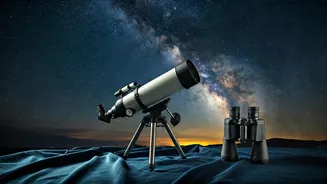
Among the visible planets, Venus and Mercury will be closest to the horizon and will disappear into the twilight earliest. Venus will present a bright glow, though its proximity to the horizon might make it tricky to pinpoint. Mercury, while dimmer, could be slightly easier to locate earlier in the month. Saturn will also be in the vicinity, but its diminishing brightness means it won't be as striking as in previous observations. Uranus and Neptune, being fainter and more distant, present the greatest challenge. Binoculars or a small telescope will be essential tools for anyone hoping to catch a glimpse of these ice giants. Jupiter, however, is expected to be the undisputed star of the show, shining brightly and remaining easily observable for most viewers, promising to be the highlight of this planetary parade.
The Moon's Role
Adding another layer of visual appeal to the evening sky, the Moon will make its appearance later on, illuminating the eastern horizon. While its luminescence might pose a slight challenge for those intensely focused on spotting the planets, it also contributes to the overall grandeur of the night sky. For many, the Moon's presence will simply enhance the breathtaking view, offering a comforting and familiar celestial companion to the more elusive planetary lineup. Its radiant glow against the backdrop of the cosmos provides a beautiful contrast, making the entire nocturnal panorama a truly memorable experience for all who choose to look up.