







Logistics: The Foundation
Logistics, in its simplest form, represents the backbone of trade and economic activity, encompassing the movement and management of goods. In Bengal,
its significance is amplified due to the state's strategic geographic location and its potential to serve as a vital gateway for trade within India and with neighboring countries. Efficient logistics systems, including transportation networks, warehousing, and supply chain management, play a crucial role in reducing costs, improving delivery times, and enhancing the competitiveness of businesses. The development of robust logistics infrastructure is therefore essential for attracting investment, fostering economic growth, and improving the quality of life for the residents of Bengal. Improved logistics is directly linked to the development of other critical sectors of the economy like health, science, and tourism.
Jute Sector Revival
The jute industry, a traditional mainstay of Bengal's economy, is poised for a resurgence. The government is backing initiatives to modernize jute production, improve its supply chain, and find new markets for jute products. This revival effort aims to support the livelihoods of jute farmers, boost employment in the sector, and leverage the sustainability of jute as a natural fiber. The focus is to make the jute sector competitive in the current times, which would result in better quality products at better prices. This sector, if revitalized, can play a significant role in the overall growth of the region, by enhancing the production and supply chain in an efficient manner.
High-Speed Rail Corridors
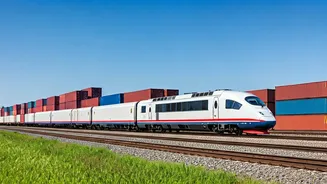
High-speed rail corridors are a critical component of Bengal's logistics strategy. They are designed to dramatically improve connectivity within the state and to major economic hubs across India. These corridors will enable faster movement of goods and people, reducing transit times and promoting trade and tourism. Such infrastructure projects will require major investment in terms of money and resources. The introduction of high-speed rails will also support regional development and integration. Further, these high-speed rail corridors will play a key role in making Bengal a logistics hub, which will boost connectivity and speed.
Budgetary Support
The Union Budget for 2026-27 is providing a major boost to logistics development in Bengal. Funds are being allocated to infrastructure projects, including the development of high-speed rail corridors, modernization of ports, and improvements to roadways. These investments are designed to address bottlenecks in the logistics chain, reduce transportation costs, and facilitate trade. The budgetary support reflects the government's recognition of the importance of logistics for economic growth and its commitment to improving the state's infrastructure. These investments would enable Bengal to compete on a global scale. Additionally, these funds will enable the development of important sectors such as health and science.
Kolkata: The Hub
Kolkata, as a major metropolitan city and the historical capital of India, is naturally positioned to be a central hub for logistics. Its port facilities, access to railways, and strategic location make it ideally suited to manage the movement of goods and materials efficiently. The city is also a major center for trade, commerce, healthcare, and science, further enhancing its importance as a logistics hub. Investments in infrastructure and technology are being made to further enhance Kolkata's capacity to handle logistics. This development will assist in establishing Kolkata as a key gateway for trade within the nation and also with neighboring countries.
Speed and Connectivity
The focus on enhancing speed and connectivity is central to Bengal's logistics strategy. Initiatives are focused on developing faster modes of transport, improving road and rail networks, and streamlining processes at ports and other key logistics hubs. This involves investments in infrastructure, the use of technology, and the implementation of efficient supply chain management practices. The ultimate goal is to reduce transit times, lower costs, and enhance the overall efficiency of the logistics system. Faster speed in the movement of goods and materials contributes directly to economic growth by reducing costs, and delays and promoting trade.
Green Mobility and Tourism
Alongside the focus on conventional logistics, there is a growing emphasis on green mobility and sustainable practices within the sector. This involves promoting the use of electric vehicles, improving fuel efficiency, and adopting eco-friendly warehousing and transportation solutions. Green mobility also encompasses promoting tourism, which is another major source of revenue and economic development for the region. As Bengal develops its tourism sector, the importance of efficient and sustainable logistics will only grow further. By adopting green and tourism-friendly strategies, Bengal aims to make its logistics sector more sustainable and reduce its environmental footprint.