








Initial Skepticism
The path to widespread acceptance for innovative ideas is rarely smooth; in fact, the journey is often paved with doubt and derision. The first section
explores inventions that were met with initial resistance and criticism. The public often struggles to comprehend or accept what is new and different, which is why it is so common for pioneering concepts to be initially mocked. The perception of these new ideas, often fueled by unfamiliarity and skepticism, frequently leads to dismissive reactions. This set the stage for a dramatic turnaround when they proved their value and transformed into essential tools, forever altering society's perception of innovation. The challenge innovators face is in navigating this initial hurdle to prove that what seems absurd today can, in fact, become the cornerstone of tomorrow.
The Telephone's Reception
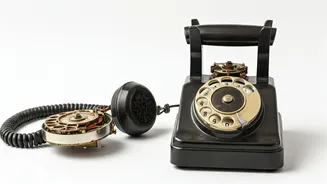
The telephone, a groundbreaking communication device, provides a clear example of initial doubt. When Alexander Graham Bell first presented his invention, many people considered it a toy. They struggled to imagine its potential impact, particularly given the reliance on the existing telegraph system. Skeptics questioned the telephone's practicality and utility. Bell and his team initially faced significant challenges in convincing the public and investors of the telephone's value. The idea of transmitting voices over wires was difficult for many to grasp, and they viewed it with amusement rather than seriousness. It was only through relentless demonstrations and improvements that the telephone slowly gained acceptance, transforming into a global phenomenon.
Automobiles Were Ridiculed
Early automobiles were initially met with considerable skepticism and even mockery. These early vehicles were slow, unreliable, and prone to breaking down. They were seen as noisy and impractical compared to horse-drawn carriages, which were the dominant mode of transportation. Critics made fun of the vehicles, pointing out their tendency to malfunction and the high cost of maintenance. Early adopters and innovators had to endure ridicule and jokes while trying to prove the worth of the automobile. The initial perception of automobiles as unreliable toys made it difficult for them to gain traction, but the rapid advancements in technology and infrastructure eventually proved the doubters wrong, with the automobile reshaping urban design, industry, and personal mobility.
The Wright Brothers' Flight
The Wright brothers faced a mountain of criticism for their ambition to achieve sustained, powered flight. When they first revealed their designs and experimental aircraft, they were met with skepticism, with many people claiming that heavier-than-air flight was impossible. The press and the public were slow to believe in the possibility of flying machines, and their early attempts were viewed with amusement and disbelief. The fact that the idea was initially dismissed did not stop the Wright brothers from their perseverance. The eventual success of their flights marked the beginning of the aviation age, fundamentally transforming travel, commerce, and warfare, and proving that persistent experimentation and belief in an idea could lead to transformative achievements.
Early Computers: Reactions
The earliest computers were large, expensive, and limited in their capabilities, which made them easy targets for mockery. The size and cost of early computers, combined with their limited utility, led many to question their practicality. Initially, critics struggled to understand the need for such massive machines. Their size was often the subject of ridicule, and there were jokes about their complexity and the perceived lack of practical applications. Even experts questioned their long-term viability. Nevertheless, as the technology improved, these machines transformed into indispensable tools, driving advances in science, business, and daily life.
The Internet's Beginnings
In its initial stages, the Internet was seen as a niche technology. Many found it to be a complex and confusing network. There was doubt that it would become a mainstream technology. The early World Wide Web was often dismissed, and the idea of accessing information and communicating online was initially met with skepticism. Those in the know, in the mid-1990s, mocked it as a playground for academics and government researchers. The cumbersome interfaces and slow speeds also contributed to this skepticism. The Internet's evolution has been astonishing, transforming into an integral part of modern life. It has reshaped communication, commerce, and access to information.
Digital Cameras Doubted
When digital cameras first appeared, they were considered inferior to their film-based counterparts. The quality of early digital images was poor, and the idea of taking photos without film was alien to many. The technology faced skepticism, and people were unsure if it could provide equivalent quality. Early digital cameras were expensive, slow, and lacked many features compared to traditional cameras. The initial reception was lukewarm, with many photographers sticking with film. However, the convenience and ease of use soon made digital cameras popular. Digital cameras’ continuous improvements made them the standard tool for photography.
Smartphones: Skepticism Persisted
When smartphones first appeared, they were met with considerable doubt. The idea of combining a phone, a computer, and other features into a single device was seen as gimmicky. Early smartphones were expensive and had limited functionality. Many people questioned the need for such advanced devices, preferring to keep their phones and computers separate. Critics struggled to see the value in such complicated gadgets, and the early models were often bulky and hard to use. The initial criticism, however, was soon overshadowed by innovation. Smartphones have transformed into an essential part of daily life, connecting people, providing entertainment, and driving innovation across industries.