





Expertise Meets AI Editing
The modern professional landscape is undergoing a dramatic transformation, largely driven by the rapid integration of artificial intelligence. Many experts,
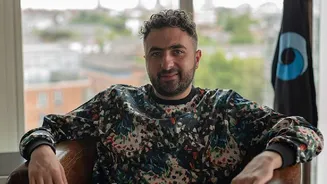
accustomed to traditional research and creative endeavors, are finding their roles shifting in unexpected directions. One notable example comes from the field of economics, where a PhD holder has shared a peculiar yet significant aspect of his current work. Instead of deep theoretical analysis or empirical research, a substantial portion of his professional time is now dedicated to refining text produced by AI systems. This specific task involves meticulous editing, such as the removal of em-dashes, a stylistic quirk often characteristic of AI-generated content. This revelation offers a compelling glimpse into the often-unseen human effort required to make AI outputs acceptable and natural-sounding for human consumption, underscoring the necessity of human judgment even as technology advances.
The Invisible Labor Force
This shift in the economist's duties brings to light a concept termed 'invisible labor' within the burgeoning AI economy. While AI tools are designed to automate tasks and generate content with remarkable speed, they are not yet flawless. They often produce outputs that, while factually based, may contain subtle errors, awkward phrasing, or stylistic inconsistencies that betray their machine origin. The work of professionals like the PhD economist in question is to rectify these imperfections, ensuring the final product is not only accurate but also reads fluently and naturally. This type of editing, though essential for quality control and user experience, is often overlooked by the end-user, who may not realize the extent of human intervention involved. It's a testament to the fact that AI is currently a powerful collaborator, but one that still requires human oversight and refinement to achieve optimal results in many professional domains.
Social Media's Reaction
The economist's candid sharing of his experience on social media platforms, like X (formerly Twitter), quickly ignited a widespread discussion. Many users expressed a mixture of surprise, amusement, and thoughtful reflection regarding the changing nature of work. Comments ranged from lighthearted jokes about an economist's advanced training being applied to such a granular editing task to more serious considerations about the future of employment. Several individuals highlighted the irony of highly educated professionals performing what might seem like mundane editing, while others pointed out that these tasks represent a new frontier of employment opportunities emerging alongside AI advancements. The exchange underscored a broader societal grappling with how AI is augmenting, rather than simply replacing, human capabilities, and the nuanced roles that experts will adopt in this evolving digital ecosystem.
Evolving Roles in AI Era
The narrative emerging from this economist's experience is a powerful indicator of how AI is fundamentally altering the job market across various sectors. Roles that once focused solely on traditional research, creation, or analysis are now often incorporating elements of AI supervision and refinement. This evolution doesn't necessarily signify job obsolescence but rather a transformation in how skills are applied. For instance, the nuanced understanding of language, context, and human communication that an economist possesses remains highly valuable, even if it's now channeled into polishing AI-generated prose. This phenomenon of 'invisible labor' is becoming increasingly prevalent, as AI systems require human intelligence to enhance their reliability, ethical alignment, and overall utility, ensuring that technology serves as a sophisticated tool rather than an unguided force.