




Mission Goals Unveiled
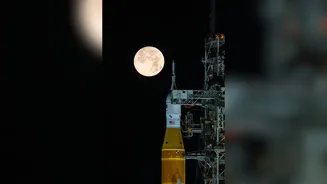
The Artemis II mission represents a monumental stride in humanity's return to lunar exploration, aiming to transport four astronauts on an ambitious 10-day
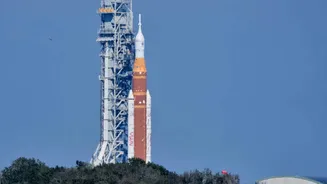
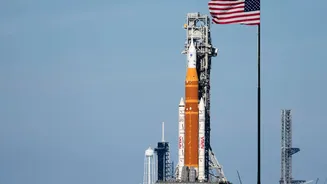
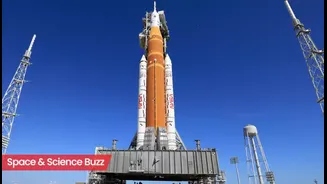
voyage encircling the far side of the Moon before returning them safely to Earth. This endeavor marks the first time humans will venture this far into space since the conclusion of the Apollo program, and it is a critical precursor to future crewed lunar landings. NASA had initially targeted March 6 as the earliest possible launch date, following a successful 'wet dress rehearsal' at the Kennedy Space Center, though a prior rehearsal in early February was cut short due to a hydrogen fuel leak on the launchpad. This delay, while pushing the launch to no earlier than September 2025, underscores NASA's unwavering dedication to ensuring the utmost safety of its astronauts and the success of this historic mission.
Helium Flow Interruption
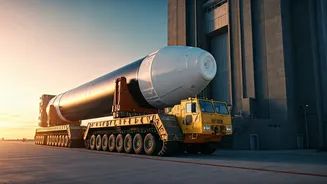
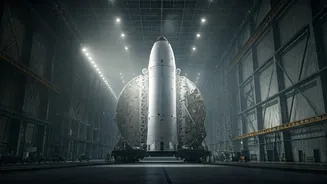
The primary reason behind the postponement of the Artemis II mission stems from an unexpected interruption in the helium flow within the Space Launch System's interim cryogenic propulsion stage (ICPS). NASA Administrator Jared Isaacman shared that overnight data revealed this anomaly, necessitating a thorough review and likely a rollback of the entire vehicle to the Vehicle Assembly Building (VAB) for extensive troubleshooting. This issue is a significant setback, almost certainly ruling out the originally targeted March launch window. Isaacman elaborated that the helium bottles in the ICPS are crucial for purging the engines and for pressurizing the liquid hydrogen and liquid oxygen tanks. While these systems functioned correctly during previous critical tests (WDR1 and WDR2), the inability to achieve helium flow during a routine repressurization operation has become a major concern. The team is investigating potential causes, including a final filter between ground systems and the flight vehicle, the umbilical interface, or a faulty check valve onboard, although corrective actions were implemented after Artemis I to mitigate such risks.
Safety and Future Outlook
In light of the technical challenges, NASA has prioritized the safety of the Artemis II crew above all else. The vehicle is currently in a secure configuration, utilizing ground-based environmental control systems for engine purging instead of its onboard helium supply. The decision to roll back the spacecraft to the VAB signifies a commitment to meticulously resolving the helium flow issue before proceeding with the launch. This proactive approach, though leading to a revised launch target of no earlier than September 2025, aligns with NASA's historical experience. Administrator Isaacman drew parallels to past NASA achievements, referencing Neil Armstrong's Gemini 8 mission, which faced an early termination due to technical difficulties, yet was followed by his historic moonwalk just over three years later. The dedication of the NASA team is evident, with continuous efforts to prepare the vehicle and ensure it is ready for launch only when all systems are verified, reinforcing the agency's vision of frequent lunar rocket launches.