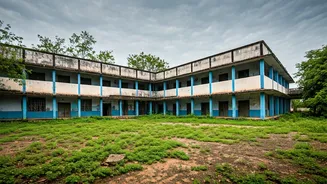








Zero Enrollment Crisis
The educational system in Telangana is confronting a serious challenge, as reflected by the fact that 2,081 government schools recorded zero enrollment.
This data reveals a significant problem within the state's education structure. Nalgonda district stands out as the most affected area, with a substantial 315 schools reportedly operating as 'ghost schools'. This implies that these schools are functioning without any students officially enrolled, raising questions about their functionality and the resources they consume. The data indicates a pressing need to investigate the underlying causes of this phenomenon and formulate effective strategies to address this educational deficiency across the state.
Nalgonda's Worst Hit
Nalgonda district's situation is particularly concerning. With a total of 315 schools listed as 'ghost schools,' the district exemplifies the gravity of the enrollment challenge. The term 'ghost schools' describes educational institutions that are officially in operation but lack any registered students. This situation raises serious queries about how efficiently resources are being allocated and whether the needs of potential students in the area are being met. The substantial number of these schools highlights the need for immediate action, including comprehensive evaluations, targeted strategies, and community involvement, to reinvigorate educational institutions and guarantee access to quality education for all students.
Causes and Implications
Several factors might contribute to this crisis, including migration, preference for private schools, or administrative errors in enrollment tracking. Whatever the causes, the implications of these 'ghost schools' are far-reaching. They may lead to misuse of funds, the disruption of educational infrastructure, and a diminished belief in public education. If these schools do not have students, there may be challenges with staff management, asset utilization, and community development. Tackling the issue requires an in-depth investigation into the specific circumstances of each school, along with a broad strategy that includes community engagement, infrastructure improvements, and effective marketing to attract and retain students.
Student and Community
The absence of students in these schools has a broader impact on both students and communities. Students may be denied access to quality education and resources. The local communities may lose essential educational centers. The situation also affects teachers and school employees, who may confront uncertainty regarding their employment. The crisis has the potential to cause social and economic instability. Finding solutions to the problem, such as community involvement, providing better educational opportunities, and addressing logistical challenges, would be critical to supporting students, improving the quality of education, and rebuilding faith in the state's educational institutions.
Seeking Solutions Forward
Addressing the problem of zero enrollment and 'ghost schools' in Telangana requires a strategic, multifaceted approach. Conducting detailed audits of each affected school is an essential initial step. This should be followed by a comprehensive review of the area's demography, community needs, and educational facilities. Community engagement is critical in understanding local requirements and building confidence in public education. Improving infrastructure and giving schools the resources they need can also enhance their attractiveness. In addition, effective marketing campaigns can raise awareness and inspire families to register their children. The government's and communities' coordinated efforts will be critical to overcoming these educational obstacles and guaranteeing that all children in Telangana get a quality education.