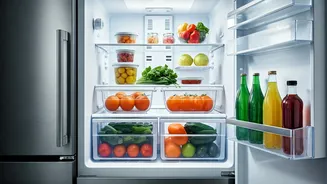







Maximize Airflow
The secret to an efficient refrigerator lies in unrestricted airflow, both inside and out. Overcrowding your fridge compartments hinders the circulation
of cold air, forcing the appliance to work harder to maintain its set temperature. Ensure that air vents within the refrigerator are never blocked by food items. Imagine these vents as the lungs of your fridge; they need to breathe freely. Similarly, the exterior needs space too. Position your refrigerator with a few inches of clearance between its back and the wall. This gap allows heat generated by the condenser coils to dissipate effectively, preventing the unit from overheating and consuming more power. Think of it as giving your fridge some personal space to cool down.
Tackle Ice Buildup
For refrigerators that utilize a direct-cool system, a common enemy of efficiency is ice accumulation. Over time, frost can build up inside the freezer compartment, creating an insulating layer that impedes proper cooling. This layer makes the cooling elements work overtime to try and penetrate the ice, leading to increased energy consumption. Regularly defrosting your refrigerator is a crucial maintenance step. This process removes the insulating ice, allowing the cooling system to operate at its peak performance. A well-maintained, frost-free interior means your fridge can cool food more effectively and use less electricity to do so. Make defrosting a routine part of your appliance care.
Wise Usage Habits
How you interact with your refrigerator significantly impacts its energy usage, especially during summer. Resist the urge to frequently open the refrigerator door, as each opening allows precious cold air to escape, forcing the compressor to kick in more often to bring the temperature back down. Consider planning your needs before opening the door to grab items quickly. Furthermore, avoid placing warm or hot food items directly into the refrigerator. Allow cooked food to cool down to room temperature first; putting hot items in makes the fridge work intensely to lower their temperature, consuming a substantial amount of energy. These simple behavioral changes can lead to noticeable savings.
Essential Maintenance
Beyond everyday usage, a few key maintenance tasks ensure your refrigerator operates at its best. First, inspect the door seals meticulously. Worn or damaged seals allow cold air to leak out, making your fridge less efficient and potentially leading to spoilage. A simple test is to close the door on a piece of paper; if you can pull it out easily, the seal may need attention or replacement. Second, regularly clean the condenser coils, usually located at the back or bottom of the appliance. These coils dissipate heat, and when they become dusty or dirty, their ability to release heat is compromised, causing the fridge to work harder and consume more power. Keeping them clean is vital for optimal performance. Before the peak summer season begins, consider getting a professional service check-up to ensure everything is in perfect working order.