






Gaganyaan Program Update
The Indian Space Research Organisation (ISRO) is diligently advancing its flagship Gaganyaan human spaceflight initiative. The agency's Chairman, V Narayanan,
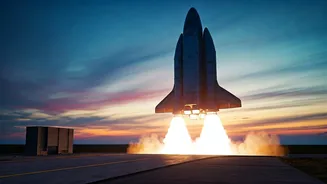
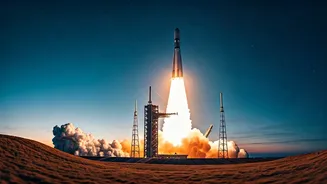
has provided an encouraging update, stating that all ongoing activities related to the preliminary uncrewed missions are progressing well. This significant undertaking, which represents a monumental leap for India's space exploration capabilities, is on a clear trajectory. The first of several Gaganyaan missions is targeted for launch within the initial three months of 2026. This upcoming mission is not an isolated event; it is the precursor to a series of tests, with a total of three uncrewed flights scheduled to precede the ultimate crewed Gaganyaan mission. While acknowledging the inherent challenges associated with pioneering such a complex endeavor, Narayanan emphasized the positive momentum across all aspects of the first uncrewed mission's preparation, signaling ISRO's readiness to tackle the complexities ahead.
Technological Shifts in Space
The evolving landscape of space missions is marked by a significant paradigm shift, as highlighted by M Sankaran, Director of UR Rao Satellite Centre. Future space endeavors will increasingly integrate both robotic systems and human involvement, introducing a novel dimension to the operational aspects of mission management. This confluence of automation and human oversight promises enhanced capabilities and new operational strategies. Concurrently, the nature of space activities itself is undergoing a transformation, moving beyond a purely state-controlled domain. Senior scientist Kiran Kumar pointed out that space is no longer exclusively the purview of national governments. The global space arena is rapidly diversifying with a substantial influx of private entities and non-state actors. This broadened participation introduces fresh complexities in managing and operating celestial objects. Consequently, a critical focus is now placed on harmonizing the interactions between governmental and private players, fostering synergistic collaborations with international partners to ensure space is leveraged for the collective benefit of humanity.
Future Operational Needs
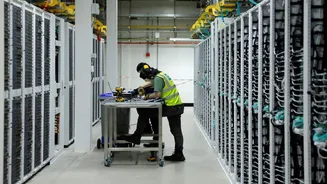
Addressing the operational demands of future space missions, ISRO Chairman V Narayanan also underscored the growing imperative to integrate cutting-edge technologies like Artificial Intelligence (AI) and Machine Learning (ML). These advanced computational techniques are poised to play a crucial role in enhancing mission efficiency and decision-making processes. Alongside AI and ML, the development of robust, cloud-based ground systems is essential for managing the complexities of modern space operations. These cloud infrastructures will provide the scalable and flexible backbone required to support increasingly sophisticated missions. The synergy between AI, ML, and advanced ground systems will be key to navigating the challenges and maximizing the opportunities presented by the expanding frontiers of space exploration, ensuring India's continued advancement in the global space arena.