



Defence Budget Surge
The cornerstone of the Union Budget 2026 was undoubtedly the substantial increase in defence spending. A 15% jump propelled the defence budget to ₹7.85
lakh crore, a clear demonstration of the government's commitment to national security. This elevated financial provision represents a strategic move, especially in light of ongoing operational priorities. The budgetary allocation goes beyond just numerical figures; it reflects a broader vision of bolstering the nation’s defence capabilities through an integrated approach. The emphasis is on not only maintaining but also enhancing India's defence infrastructure, ensuring the nation's preparedness to meet both current and future security challenges, reinforcing India’s strategic posture on the global stage. This increase is viewed as a commitment to ensuring that the armed forces are well-equipped and ready to respond to any threats, effectively projecting power and safeguarding national interests.
Modernisation Initiatives Unveiled
A major portion of the defence budget is earmarked for modernisation initiatives aimed at equipping the armed forces with cutting-edge technologies and advanced weaponry. This involves a multi-pronged approach encompassing land, air, and sea capabilities. Modernisation efforts include procuring advanced fighter jets like the Rafale and integrating advanced systems. Naval expansion is another key area, with increased investment in submarines, unmanned platforms, and coastal security. This forward-looking approach underscores the government's resolve to stay ahead of evolving threats and maintain a strong defence posture. The allocation of funds will facilitate the procurement of advanced equipment, improving the overall operational effectiveness of the forces. The modernisation plan extends to boosting indigenous manufacturing and reducing dependence on foreign sources. It also includes investments in research and development to foster innovation in defence technologies.
Boosting Indigenous Manufacturing
A crucial aspect of the defence budget is the emphasis on promoting indigenous manufacturing and fostering a self-reliant defence ecosystem. This commitment is evident in the allocation of funds towards supporting local manufacturers and encouraging the development of home-grown defence technologies. The goal is to reduce reliance on foreign imports and promote self-sufficiency in critical defence equipment and systems. This initiative encompasses a range of activities, including providing financial incentives, transferring technology, and collaborating with private sector entities to facilitate domestic production. The push for indigenisation is not only about economic benefits but also about enhancing strategic autonomy and ensuring a stable supply chain for defence resources. The government aims to create a robust aerospace, missile, and manufacturing ecosystem within the country. This will not only generate employment opportunities but also foster innovation and technological advancements in the defence sector, ensuring that India remains at the forefront of defence capabilities.
Naval Expansion Plans
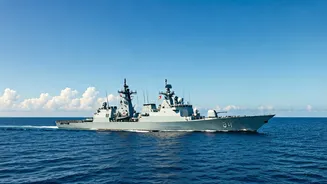
The Union Budget 2026 provides a substantial boost to the Indian Navy, with a focus on expanding its capabilities and modernizing its fleet. This includes investments in new submarines, such as those planned under Project 75(I), which represents an $8 billion leap in undersea capabilities. The budget also allocates funds for unmanned naval platforms and enhancing coastal security measures. The expansion of the naval forces aims to enhance maritime domain awareness and ensure the protection of India’s maritime interests. These initiatives include procuring advanced vessels, modernizing existing ships, and developing port infrastructure. Coastal security is crucial, particularly in light of evolving threats and geopolitical considerations. The focus on naval expansion is strategically vital, acknowledging the significance of the oceans in India's overall defence strategy. The government is committed to transforming the navy into a technologically superior force, capable of projecting power and safeguarding India's strategic interests in the Indo-Pacific region and beyond.
Aerospace and Missile Advancements
The budget underscores a strong push for advancements in aerospace capabilities, including the development of advanced fighter jets and missile systems. Investments in these areas are aimed at enhancing air dominance and boosting India's deterrence capabilities. Programs include ongoing projects to acquire advanced fighter aircraft, like the Rafale jets, and potentially, integrating them with next-generation platforms like the Su-57. Parallel efforts focus on the development and deployment of indigenous missile systems. Modernizing the aerospace capabilities also involves upgrading existing air force assets and strengthening air defence systems. These improvements are crucial to maintaining a strategic edge in the air domain, supporting the nation's defence capabilities. The government's investment demonstrates a long-term commitment to advancing air power and ensuring that the Indian Air Force is equipped to respond effectively to any potential threats. The emphasis on missiles reflects the need for advanced strategic deterrence capabilities to protect the country's interests.