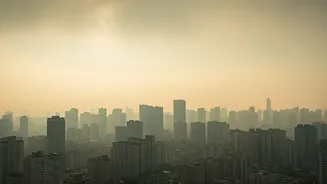








Smog's Grim Grip
Dense smog has enveloped Delhi, drastically reducing visibility and causing air quality to deteriorate significantly. The air quality index (AQI) has reached
'severe' levels in numerous locations, as reported by various sources. Dwarka is among the worst-hit areas, indicating the widespread nature of the problem. This severe pollution poses significant health risks to the residents, leading to concerns among both the authorities and the public. The government is monitoring the situation, and the public is advised to take necessary precautions to safeguard themselves against the effects of polluted air.
Sources of Pollution
The reasons behind Delhi's poor air quality are multifaceted. The onset of winter brings with it specific atmospheric conditions that trap pollutants closer to the ground. These atmospheric conditions often prevent the dispersal of pollutants. Furthermore, seasonal factors such as stubble burning in neighboring states contribute substantially to the rise in pollution levels. Industrial emissions and vehicular traffic are also significant factors, intensifying the problem. Understanding these various factors is essential for creating effective strategies to improve Delhi's air quality and protect its residents' health. These sources, in combination, create a dangerous cocktail of pollutants that leads to the 'severe' AQI readings observed throughout the city.
Health Implications
The severely polluted air in Delhi carries serious health implications. Exposure to such high levels of pollutants can trigger or exacerbate respiratory issues, including asthma and bronchitis. Vulnerable groups, such as children, the elderly, and those with pre-existing health conditions, are particularly susceptible. The long-term effects of prolonged exposure to poor air quality can be severe, potentially leading to cardiovascular diseases and other chronic illnesses. Residents are advised to take precautionary measures like wearing masks, limiting outdoor activities, and using air purifiers to minimize their exposure to the polluted air. Continuous monitoring of air quality is necessary to assess the real impact on public health.
Government Response
The government is actively involved in addressing Delhi's air quality concerns. Various measures are being implemented to mitigate the problem. The actions include restrictions on construction activities, enhanced monitoring of pollution sources, and initiatives to promote cleaner transportation options. The authorities have also engaged in public awareness campaigns to educate residents about the risks associated with air pollution and ways to protect themselves. The effectiveness of these measures is constantly evaluated, and the government is committed to adapting and implementing additional strategies as required to combat the issue and improve air quality for the benefit of the residents.
Looking Ahead
The battle against air pollution in Delhi is ongoing and requires a multifaceted approach. To tackle this, continuous monitoring of air quality is crucial. Implementing and enforcing stricter regulations on pollution sources, such as industries and vehicles, is essential. The promotion of sustainable practices and renewable energy sources can help reduce the overall pollution levels. Raising public awareness about the causes and impacts of air pollution is also important, encouraging residents to make informed choices. Ultimately, a concerted effort involving government bodies, residents, and other stakeholders is needed to establish cleaner air and safeguard public health in Delhi. Consistent and sustained efforts are vital for improving the air quality over the long term.





![[WATCH] 'Real Madrid, Ramadan and rest' - Mohammed Siraj how last-minute World Cup call-up changed February plan](https://g-mob.glance-cdn.com/public/fc/image/ByYT_LEmlrD0.webp)