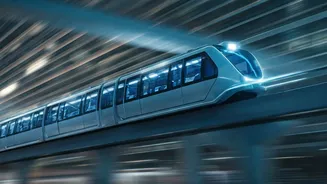







Transforming Urban Mobility
The Bandra-Kurla Complex (BKC) in Mumbai is on the cusp of a significant transformation in its transportation landscape with the introduction of a novel
Pod Taxi project. This initiative, spearheaded by the Mumbai Metropolitan Region Development Authority (MMRDA), is designed to fundamentally alter how people navigate one of the city's most vital business hubs. It aims to drastically reduce the time spent commuting and offer a much-needed respite from the persistent traffic jams that plague the area. The project is particularly focused on improving the crucial 'last-mile' connectivity, ensuring that commuters can seamlessly travel from nearby suburban stations like Bandra and Kurla to the heart of BKC. With an anticipated surge in the number of people visiting and working in BKC due to ongoing and future infrastructure developments, such as the high-speed bullet train corridor and new commercial establishments, the need for an efficient and dependable transport solution has never been more pressing. The MMRDA acknowledges this critical requirement and is backing this forward-thinking project to meet the demands of an ever-growing commuter base, estimated to be between 4 to 6 lakh individuals daily.
Autonomous Technology for Efficiency
Central to the BKC Pod Taxi project's innovative approach is its adoption of a fully autonomous system. This cutting-edge technology is especially well-suited for the intricate network of relatively narrow roads that connect BKC with its adjacent suburban railway stations, Bandra and Kurla. The autonomous nature of the pods allows for precise and efficient operation, enabling them to run with remarkable frequency. The MMRDA highlights that these pods can operate at intervals of just 15 to 30 seconds. This high frequency is a key factor in managing passenger flow and minimizing wait times, especially during peak hours. The system's ability to navigate these specific routes effectively, combined with its autonomous capabilities, ensures a smooth and continuous service that is crucial for supporting the large volume of daily commuters expected. This technological integration is designed to create a reliable and seamless travel experience, setting a new benchmark for last-mile connectivity in a dense urban environment.
Project Scope and Features
The proposed BKC Pod Taxi network will span an impressive 8.80 kilometers, establishing a comprehensive route designed to serve the needs of the business district. Along this route, a total of 38 stations will be strategically placed to ensure accessibility for commuters across various points within BKC and its connecting areas. Each individual pod within this system is engineered for efficiency and passenger comfort, measuring 3.5 meters in length, 1.47 meters in width, and 1.8 meters in height. These dimensions allow for agile movement through the designated pathways. Designed to accommodate small groups, each pod will have a seating capacity for approximately six passengers. While operating, these pods will achieve a top speed of 40 kilometers per hour, striking a balance between speed and safety within the urban setting. The overall scale and design of this network underscore a significant investment in advanced urban transit infrastructure.
Financials and Fare Structure
The BKC Pod Taxi project has received official approval, with its estimated cost set at approximately Rs 1,017 crore. This significant financial commitment reflects the scale and importance of the undertaking. The development strategy for this project is rooted in a Public-Private Partnership (PPP) model, indicating a collaborative approach between government bodies and private enterprises to bring this infrastructure to fruition. Regarding the cost to commuters, a comprehensive Techno-Economic Feasibility Study (TEFS) has proposed a fare of Rs 21 per kilometer. To address inflationary pressures and operational expenses over time, this fare is slated for an annual increase of 4 percent. However, it's important to note that the final determined fare will be officially announced at a later stage, during the project's 'conditions precedent' phase. This fare structure was carefully determined after conducting stated preference surveys, comparing it with existing modes of transport.
Understanding Commuter Preferences
The fare of Rs 21 per kilometer for the Pod Taxi service has been meticulously decided based on detailed surveys of current auto and bus users in the BKC area. These surveys aimed to understand their willingness to pay for a more efficient commute. Currently, passengers traveling from Bandra or Kurla to BKC via a metered auto incur a cost of Rs 15.33 per kilometer. Sharing an auto for the same journey typically costs between Rs 30 to Rs 40 per passenger. For those opting for traditional taxis, the cost averages Rs 18.67 per kilometer. Ride-sharing services like Ola and Uber often implement dynamic pricing, which can range from Rs 80 to Rs 100 for the short 2-3 kilometer trips from the stations to BKC. The survey results indicated a strong willingness among commuters to embrace the Pod Taxi service, with approximately 70% of current auto users and 36% of bus users expressing their readiness to pay Rs 21 per kilometer for this enhanced mode of transport.
A Model for India
The BKC Pod Taxi project represents more than just an improvement for Mumbai's transport system; it signifies a forward-looking step in urban mobility for India as a whole. By introducing an advanced, autonomous pod system, the project aims to provide a highly efficient and convenient commuting alternative for the thousands of individuals who travel to and from this key business district daily. The successful implementation and operation of this innovative transport solution are expected to serve as a valuable case study and a potential blueprint for future urban transport initiatives across the nation. As cities continue to grow and face increasing pressures on their infrastructure, projects like BKC Pod Taxis offer a glimpse into a more sustainable, time-efficient, and passenger-centric approach to public transportation, potentially paving the way for similar advancements elsewhere in the country.