








The Heat's Grip
Extreme heat is no longer just an inconvenience; it's a defining crisis for global agriculture, and India stands at a critical juncture. The frequency,
intensity, and duration of these scorching periods have escalated dramatically over the last fifty years, according to a joint report by the Food and Agriculture Organization (FAO) and the World Meteorological Organization (WMO). This isn't just about uncomfortable warmth; it's about profound physiological stress and direct physical damage to the very foundations of our food supply – from the crops in our fields and the livestock in our pens to the fish in our waters and the forests that sustain biodiversity. The report defines extreme heat by its sheer magnitude and persistence, differentiating it from the more transient nature of typical heatwaves, highlighting its devastating potential to destabilize agrifood systems and landscapes worldwide.
Impact Across the Chain
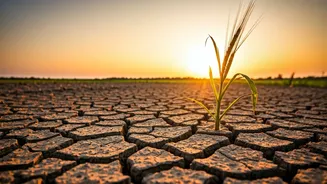
The ramifications of extreme heat ripple through every segment of the food system. For crops, it means accelerated evaporation of precious soil moisture, inducing severe physiological stress and disrupting the crucial grain-filling stage for crops like wheat, leading to premature maturity and significantly reduced yields. Livestock, particularly in the dairy and poultry sectors, suffer from heat stress, resulting in diminished growth, lower milk and egg production, and a tragic increase in mortality rates. The aquatic realm isn't spared either; rising water temperatures deplete dissolved oxygen levels, creating hypoxic conditions that force fish to migrate to deeper, cooler waters, making them inaccessible to fishermen and disrupting marine food chains. Even forests are degraded, their health compromised, and the risk of devastating wildfires intensified, leading to a loss of biodiversity and reduced yields of valuable non-timber forest products like fruits and honey. This interconnectedness means that a heat event in one area can cascade into widespread disruption across multiple food sources.
India's Heightened Risk
India's specific context amplifies its vulnerability to these heat-induced challenges. As a developing nation with a colossal population, its food security is intrinsically tied to agriculture, a sector that already operates under significant pressure. The reliance on staple crops like wheat and rice, which are notably sensitive to temperature fluctuations, places a large portion of the population at risk. The Indo-Gangetic Plains, often referred to as India's food bowl, are particularly susceptible to terminal heat stress, where even a minor temperature increase above the seasonal average can cause shriveled grains and drastically cut wheat yields, as evidenced by the 2022 heatwave. Rice, a primary source of calories for over 70% of Indians, is also heavily dependent on consistent rainfall, a pattern increasingly disrupted by rising heatwaves. Furthermore, the agricultural sector provides employment for approximately 45% of India's workforce, making crop failures a direct driver of immense financial strain and farm distress. The human cost is also stark; agricultural workers, who toil outdoors, face a 20 times higher risk of heat-related mortality compared to the average civilian, underscoring the urgent need for worker protection.
Policy Hurdles Persist
India's agricultural policy framework, while aimed at ensuring farmer incomes, has inadvertently created structural impediments to climate resilience. The Minimum Support Price (MSP) system, designed to stabilize markets, has primarily entrenched the cultivation of wheat and rice, water-intensive crops that are also heat-sensitive. Compounding this, subsidies for electricity and fertilizers further incentivize practices like paddy cultivation, even in regions with limited water resources. This focus on water-guzzling crops has led to the displacement of traditional, climate-resilient seeds and varieties that were naturally adapted to local heat and drought conditions over centuries. While there's growing advocacy for 'Shree Anna' (millets) and crop diversification, state-level incentives often contradict these efforts by continuing to offer financial bonuses for wheat and rice above the MSP. This creates a policy trap where economic incentives actively discourage the adoption of more sustainable, heat-tolerant crops. Moreover, critical infrastructure for adaptation, such as thermal shelters for aquaculture or robust plans for managing forest fuel loads to prevent wildfires, remains inadequate. The legal framework for labor protection also falls short, with existing advisories for workers facing heat stress being non-binding and lacking specific, enforceable protections against the accelerating impacts of climate change.
Charting a Resilient Future
Transforming India's agrifood systems towards greater resilience requires a fundamental shift from reactive survival to proactive planning, addressing food security as a critical Sustainable Development Goal. A key strategy involves realigning fiscal incentives at the state level, gradually phasing out support for water-intensive monocultures and redirecting it towards heat-tolerant crops like millets, pulses, and oilseeds, which demand significantly less water. While India leads in global millet production, enhancing its output to rival wheat and rice necessitates increased investment in research and development focused on high-yield production, efficient processing, and improved storage techniques for these climate-resilient crops, alongside minimizing post-harvest losses. Crucially, the human element of the food system must be protected by integrating sector-specific heat action plans into rural labor schemes, encompassing adjusted work hours, hydration protocols, and thermal insurance for outdoor agricultural workers. Furthermore, embracing the 'Blue' and 'Green' economies is vital; this includes establishing thermal shelters for aquaculture and creating institutional protections for non-timber forest products, thereby weaving fisheries and forest resources into the national food security strategy. Achieving true food security in a warming world demands a comprehensive, equitable, and climate-resilient approach to our food systems.