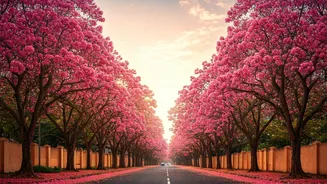







A City Adorned in Pink
The city of Kochi is currently awash in a spectacular display of pink trumpet trees, scientifically known as Tabebuia rosea, which have burst into bloom
across various urban landscapes. This stunning natural phenomenon has transformed streets and public spaces into breathtaking vistas, leading many to draw parallels with the renowned cherry blossoms of Japan and the vibrant floral avenues of Bengaluru. The visual spectacle has captivated both residents and visitors, offering a refreshing and unexpected natural delight amidst the city's usual urban environment. The sheer scale of this year's bloom, following the trees' planting approximately nine years ago, marks a significant and memorable event for Kochi, turning everyday journeys into picturesque experiences. The falling pink petals create an almost magical atmosphere, inviting moments of pause and appreciation for nature's artistry. This event has spurred widespread sharing on social media, with images and videos showcasing the city's temporary transformation into a dreamy, pink-hued landscape, celebrated for its beauty and the joy it brings to the community.
Ephemeral Beauty's Allure
The captivating bloom of the pink trumpet trees is a fleeting spectacle, typically gracing the city for only a few weeks. This ephemeral nature enhances its charm, making every sighting a cherished moment to be savored. Native to the tropical and subtropical regions of the Americas, these trees are celebrated for their dramatic floral displays, which commonly occur during the dry season. This year, Kochi is experiencing an unprecedented bloom, transforming locations like Sahodaran Ayyappan Road, Panampilly Nagar, and the Chambakkara Walkway into scenes of vibrant pink. Residents have been actively seeking out these blooming trees, turning parks, roadside stretches, and even residential areas into impromptu gathering spots for photography and quiet contemplation of nature's beauty. Social media platforms have become a canvas for this visual celebration, with countless posts expressing admiration and wonder at the unexpected natural spectacle unfolding in their city.
More Than Just Pink Trumpets
While the vibrant pink hues are largely attributed to the Tabebuia rosea, the beauty adorning Kochi's streets is also enhanced by other flowering trees. Rajan Chedambath, Director of the Centre for Heritage, Environment and Development (C-HED), clarified that not all pink blossoms seen are from the pink trumpet tree. Species like the manimaruthu, which also feature pink flowers resembling those of the trumpet trees, were planted as part of compensatory afforestation for the Kochi Metro rail project, particularly along the Container Terminal Road. These trees, along with red trumpet trees, contribute to the overall floral richness of the city during this period. The presence of these diverse species, including the exotic Tabebuia rosea, showcases Kochi's capacity to host a variety of flora and underscores the city's commitment to enhancing its green cover and aesthetic appeal, even as it expands its infrastructure.
Understanding Exotic Flora
The Tabebuia rosea, while originating from Central America, specifically southern Mexico, and growing up to 30 meters tall, is not considered an invasive species in India. Ecologists like Dr. E Kunhikrishnan highlight that many of Kochi's avenue trees are exotic species from South America, including major plantation trees such as rubber, cinchona, and mahogany. Unlike invasive species like rakshasa konna or water hyacinth, which have demonstrable negative impacts on local ecosystems and economies, the pink trumpet tree has not shown harmful effects on India's local ecology. While some countries, like Singapore, classify it as a harmful invasive plant, its introduction and growth in India have been managed without adverse ecological consequences. This distinction is crucial, emphasizing that not all introduced species pose a threat and that many exotic trees have successfully integrated into the urban landscape, contributing to its beauty and biodiversity.