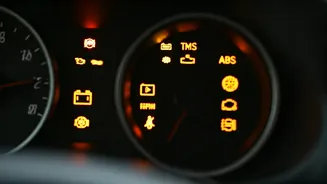








Engine Check Light
The engine check light, often resembling an engine block, is a critical indicator. It signals a malfunction within the engine system, which could stem from
various issues such as a loose gas cap, problems with the catalytic converter, or even ignition coil failures. If this light illuminates, it's crucial to get your car checked immediately by a trusted mechanic. Ignoring this light can lead to decreased fuel efficiency, reduced engine performance, and potentially severe, costly damages. When the engine check light comes on, it is recommended to get your vehicle inspected as soon as possible to avoid the risks associated with disregarding it. Prompt attention can save you money and prevent greater mechanical problems.
Oil Pressure Warning
The oil pressure warning light, commonly depicted as an oil can, signals a potential issue with your engine's lubrication. It indicates that the oil pressure is low, meaning the engine may not be receiving adequate lubrication. Driving with low oil pressure can result in significant engine damage due to increased friction and wear. If this light appears, safely pull over immediately and switch off the engine. Check your oil level and add oil if necessary. If the light persists after adding oil or if the oil level is normal, it's vital to have your car towed to a mechanic to diagnose the problem, which could be anything from a faulty oil pump to a leak. Addressing this issue promptly can protect your engine from irreversible damage.
Battery Warning Light
The battery warning light, typically shaped like a battery, alerts you to issues with the charging system. This suggests that the car battery is not receiving a charge from the alternator. Several things can trigger this light, including a worn-out alternator, a damaged battery, or problems with the charging system's wiring. When this light appears, it's important to turn off unnecessary electrical devices to conserve battery power. Have your vehicle checked by a mechanic as soon as possible. Continuing to drive with this light on can cause the battery to drain completely, leaving you stranded. Timely inspection and repair can prevent breakdowns and preserve the life of your battery and other electrical components.
Brake System Warning
The brake system warning light is often represented by an exclamation point inside a circle, often accompanied by the word 'BRAKE.' This light has various meanings, including a low brake fluid level, a problem with the braking system itself, or even the parking brake being engaged. If this light comes on while driving, slowly pull over and check your brake fluid level. If the fluid level is low, inspect for leaks. If the light persists, or the brakes feel unusual, it's essential to have your car checked immediately by a qualified mechanic. Ignoring this warning can significantly impair your braking ability, putting you and others at risk. Prioritize immediate inspection and repair if this light activates.
ABS Warning Light
The ABS (Anti-lock Braking System) warning light, usually displaying 'ABS' inside a circle, indicates a problem with the anti-lock braking system. The ABS helps prevent wheel lock-up during braking, allowing you to maintain steering control in emergencies. When the ABS light turns on, the regular braking system will still function, but the ABS feature will not be available. Seek immediate repair. While the car's regular braking system will continue to work, the absence of ABS can lengthen stopping distances, especially on slippery surfaces. The ABS warning light indicates the need for prompt attention.
Tire Pressure Warning
The tire pressure monitoring system (TPMS) warning light, typically a horseshoe-shaped symbol with an exclamation point, alerts you to low tire pressure in one or more of your tires. Low tire pressure reduces fuel efficiency, increases tire wear, and can affect vehicle handling. If this light comes on, use a tire pressure gauge to check the pressure of all your tires. Inflate them to the recommended pressure indicated on the sticker inside your driver's side doorjamb. This ensures proper tire function and safety. Addressing low tire pressure is essential for safe driving and to get the most out of your tires.
Airbag Warning Light
The airbag warning light, often depicted as a person sitting with a circle in front (representing an airbag), signifies an issue with the airbag system. This could mean a problem with the airbags themselves, the sensors, or the control module. If this light is illuminated, the airbags might not deploy properly in a crash, significantly increasing the risk of injury. It's critical to have the airbag system inspected and repaired by a professional mechanic as soon as possible. Driving with a faulty airbag system compromises your safety and that of your passengers. Immediate attention is necessary to ensure the airbags can protect you in case of a crash.