


Pollinating Powerhouses: Bees
Bees are far more than just buzzing insects; they are indispensable pillars of global food production and hold deep symbolic meaning across human cultures.
Ancient civilizations like the Egyptians saw them as divine, linking them to their sun god, Ra, while Hindu traditions connect them with deities like Vishnu. Scientifically, their impact is monumental: bees are responsible for pollinating approximately 75% of the world's food crops. Imagine a world without apples, almonds, blueberries, or even coffee – without bees, such staples would be severely diminished or entirely absent. Their diligent work in our fields and gardens is directly responsible for the bounty on our tables, making their seemingly simple activity a cornerstone of modern agriculture and a vibrant symbol of life's continuation.
Loyal Companions: Dogs
Revered across the globe as 'man's best friend,' dogs embody loyalty and have served humanity in myriad practical ways throughout history. Indigenous cultures often viewed them as spiritual guides and protectors, while contemporary society benefits from their remarkable skills in diverse roles. Guide dogs empower individuals with visual impairments, granting them independence and mobility. Therapy dogs provide crucial emotional support and comfort to those experiencing trauma or stress. In the face of disaster, rescue dogs, with their extraordinary senses and unwavering dedication, tirelessly search for survivors. Their innate emotional intelligence and keen senses make them invaluable partners, helping to bridge human fragility with resilience and hope.
Ecosystem Engineers: Elephants
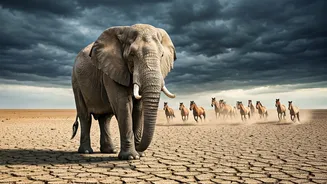
Holding a place of reverence in many cultures, particularly in Asia where the elephant-headed god Ganesha symbolizes wisdom, elephants are far more than just majestic creatures. They are scientifically recognized as keystone species, meaning their presence dramatically shapes their environment. Through their foraging habits, they aid in seed dispersal, which is crucial for maintaining the diversity and health of forest ecosystems. The pathways they carve through dense vegetation become vital routes for other animals. Furthermore, their dung acts as a natural fertilizer, enriching the soil and supporting plant growth. In both ancient lore and modern ecology, elephants represent the essential forces of balance and the continuous cycle of life within their habitats.
Kelp Forest Guardians: Sea Otters
Though not as widely featured in ancient stories as some other animals, sea otters are critical ecological custodians, especially in the Pacific Northwest. While indigenous peoples historically valued their exquisite fur, modern science highlights their indispensable role in preserving kelp forest ecosystems. By actively preying on sea urchins, which can otherwise decimate kelp beds, sea otters allow these vital underwater forests to flourish. These kelp forests are not only biodiversity hotspots, providing shelter for countless marine species, but also act as significant carbon sinks, absorbing vast amounts of atmospheric carbon dioxide. Thus, the playful sea otter plays a silent but crucial role in mitigating climate change and maintaining ocean health.
Nocturnal Necessities: Bats
Often unfairly maligned in myths as symbols of darkness or ill omen, bats are actually indispensable allies to both nature and human agriculture. In Mayan cosmology, the bat god Camazotz indeed represented the night and transformation, but their real-world impact is profoundly positive. Scientifically, bats are vital pollinators for a variety of plants, including the agave species essential for producing tequila. Moreover, they are voracious insectivores, consuming enormous quantities of pests that could otherwise damage crops and necessitate the use of chemical pesticides. Their nighttime flights are essential for seed dispersal and insect population control, proving that creatures often feared are, in fact, fundamental to ecological stability.
Fertility Architects: Earthworms
Earthworms, despite their humble appearance and lack of presence in folklore, are the silent, tireless engineers of soil fertility. Even Charles Darwin recognized their immense ecological significance, dedicating considerable study to their impact on the land. By continuously burrowing through the soil, they aerate it, improving drainage and root penetration, while their waste products enrich the earth with essential nutrients. This constant process of consumption and excretion recycles organic matter, transforming compacted or infertile ground into a rich medium capable of supporting robust plant growth. Agricultural communities worldwide owe a substantial part of their successful harvests to the unglamorous yet essential subterranean labor of earthworms.
Desert Survivors: Camels
Poetically referred to as 'ships of the desert' in Middle Eastern literature, camels are iconic symbols of endurance and survival in the harshest environments. Their remarkable physiological adaptations, such as the ability to store fat in their humps for energy and withstand extreme heat and dehydration, make them crucial lifelines in arid regions. Beyond their indispensable role in transportation across vast deserts, camels provide valuable resources like nutrient-rich milk and are deeply embedded as cultural symbols of resilience and perseverance. In landscapes where human survival is a daily challenge, camels embody both practical utility and the enduring spirit of adaptation.