





A Historic Appointment
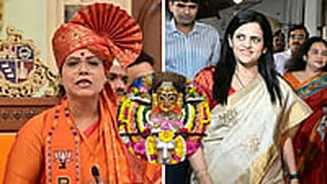
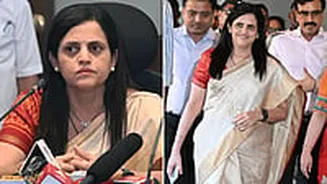
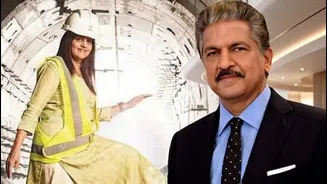
In a move that signifies a powerful commitment to gender equality, senior IAS officer Ashwini Bhide has been appointed as the Brihanmumbai Municipal Corporation's
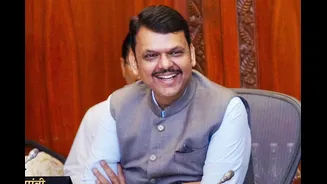
(BMC) first-ever woman commissioner. This landmark decision by the Mahayuti government, under Chief Minister Devendra Fadnavis, aims to challenge deeply ingrained gender stereotypes within the state's administrative framework. Bhide, previously serving as a principal secretary in the Chief Minister's Office (CMO), was selected not only for her considerable merit and extensive experience in managing large-scale infrastructure projects within Mumbai but also to send a clear and strong message about women's capabilities in leadership. Despite Maharashtra having a rich history of accomplished female bureaucrats, the highest civic office in the country's financial capital has historically been a domain exclusively occupied by men. This decision, made after consultation with Deputy Chief Ministers Eknath Shinde and Sunetra Pawar, underscores a deliberate effort to redefine traditional leadership structures and pave the way for more women in influential positions.
Fadnavis's Vision for Empowerment
Chief Minister Devendra Fadnavis has consistently demonstrated a belief in the principle of equality, and his actions in elevating women to prominent administrative roles reflect this conviction. He has openly expressed his concern regarding the underrepresentation of women in key organizational leadership positions. This appointment of Ashwini Bhide to lead the BMC is not an isolated incident but part of a discernible pattern. Earlier, in January 2024, while serving as Deputy CM with the Home portfolio, Fadnavis had appointed IPS officer Rashmi Shukla as Maharashtra's first woman Director General of Police (DGP). Shukla, a distinguished officer from the 1988 batch, had a notable career trajectory, including stints as Additional Director General for the Sashastra Seema Bal and Central Reserve Police Force, as well as serving as the Police Commissioner of Pune and heading the State Intelligence Bureau. Furthermore, in June 2024, Fadnavis was instrumental in proposing IAS officer Sujata Saunik's appointment as the state's first woman Chief Secretary, a proposal that received approval. These strategic appointments highlight Fadnavis's proactive approach to dismantling gender barriers and championing women in the highest echelons of public service.
Bhide's Credentials and Context
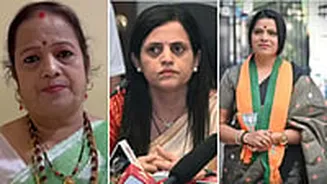
Ashwini Bhide's selection as BMC Commissioner was a confluence of her distinguished administrative acumen and the government's strategic intent to promote gender diversity in leadership. Fadnavis was particularly keen on appointing a 'trusted and capable administrator' to head the BMC, recognized as the nation's wealthiest municipal body. This desire for strong leadership was further amplified by the recent appointment of Ritu Tawde, the first BJP Mayor of the BMC earlier in the year. Sources indicate that the Chief Minister emphasized the need for someone with robust administrative experience and an unwavering dedication to public service, especially given the government's commitment to transforming Mumbai and fulfilling electoral promises. This appointment also arrives in a context where women bureaucrats like Chitkala Zutshi, Chandra Iyengar, and Medha Gadgil have previously held significant roles, though historically, positions like Chief Secretary and BMC Commissioner were predominantly male preserves. Bhide's appointment is thus a significant departure from this norm, showcasing a willingness to place confidence in female leadership for critical civic management.
Broader Representation Trends
The recent appointments of women to top administrative posts in Maharashtra, including Ashwini Bhide as BMC Commissioner and Rashmi Shukla as DGP, appear to align with the broader national discourse on women's reservation and representation. The state BJP, under party chief Ravindra Chavan, has recently integrated 10 women into its 43-member state executive committee, signaling an internal push for greater female participation. Historically, Maharashtra has seen fluctuating levels of women's representation in its political and administrative structures. The state's policy for women's reservation in local bodies, initially introduced in 1994 by then-Chief Minister Sharad Pawar with a 33% quota, has since been enhanced to 50%. Despite these advancements, women's presence in the state cabinet has remained relatively low since Maharashtra's formation in 1960. The current 288-member state Assembly includes 21 women MLAs from various parties. In the 43-member Fadnavis Cabinet, there are five women ministers: three Cabinet ministers and two Ministers of State. Of these, three are from the BJP (Pankaja Munde, Meghana Bordikar, and Madhuri Misal), and two represent the NCP (Sunetra Pawar and Aditi Tatkare). These figures, while showing progress, also highlight the continued need for initiatives that actively promote and support women in leadership across all levels of governance.