







The Viral Sensation
In the bustling "Silicon Valley of India," Bengaluru, a common sight took an unexpected turn, capturing the attention of the internet. A short video clip,
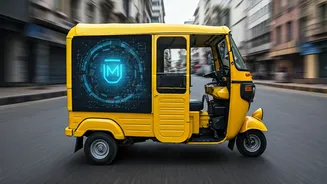
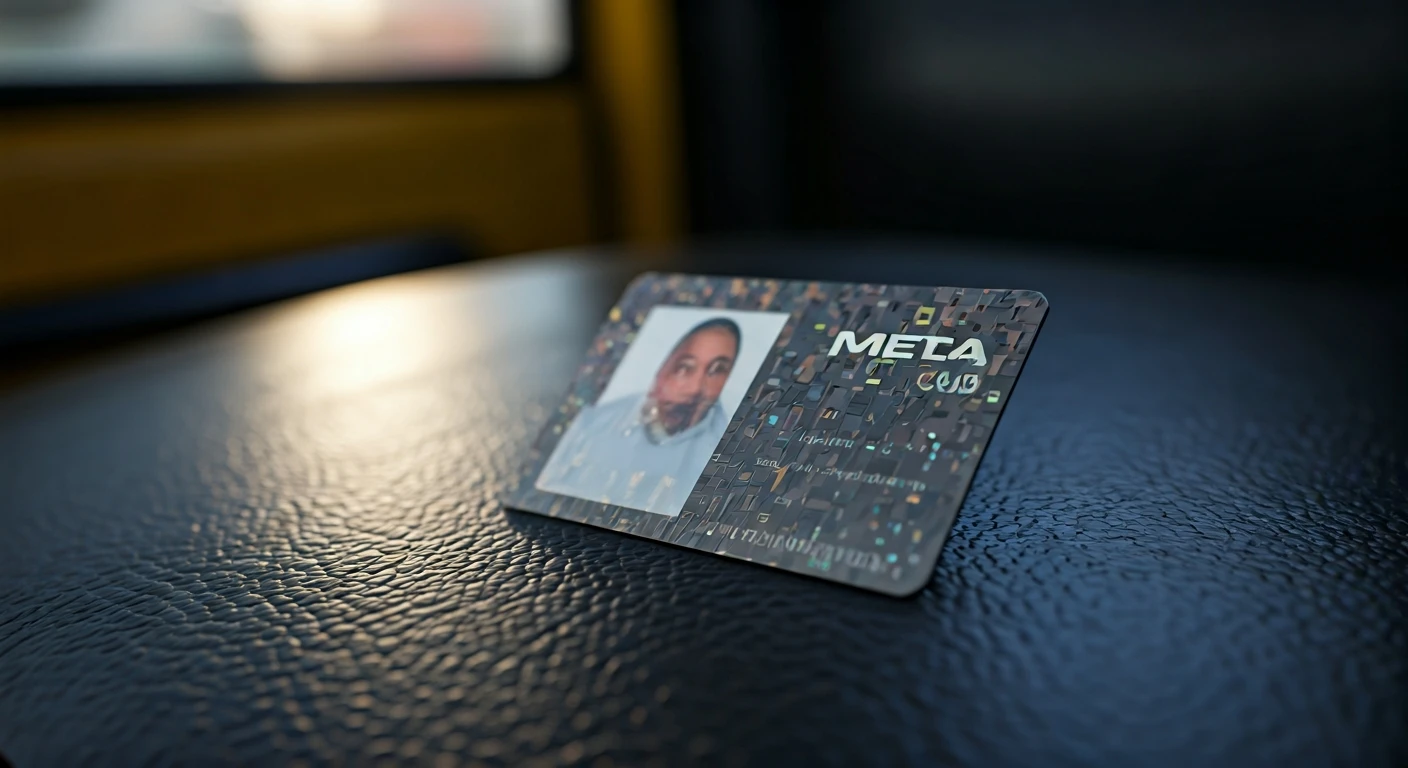
shared widely across social media platforms, showcased an auto-rickshaw with a high-security ID card from the tech giant Meta (formerly Facebook) conspicuously hanging from its interior. This peculiar detail immediately sparked a flurry of online conversations, prompting many to ponder the extent of recent technological industry downsizing. The image of a corporate badge in such an unconventional setting resonated deeply, suggesting a potential shift in the economic landscape and public perception of the tech sector's stability. The video, initially posted by Siddhant Singh Rajput, quickly gained traction, with its accompanying caption hinting at a relatable struggle: "Yahan bhi reject kar diya" (Rejected here too), humorously implying the auto driver might be a victim of recent workforce reductions.
The Great Debate
The appearance of the Meta ID card in the Bengaluru auto-rickshaw has become a focal point for intense online speculation, dividing social media users into various camps. One prominent theory, dubbed the 'downsized developer' hypothesis, suggests that the driver is a highly skilled former tech professional, perhaps an engineer or analyst, who was impacted by the significant layoffs of 2024 and 2025. In this narrative, the individual has transitioned to the gig economy, driving an auto-rickshaw to make a living. Some online commentators even proposed that such a career change might be financially beneficial, with one user remarking that they might now be earning more as a freelancer than they did with large multinational corporations. Contrasting this is the 'found item' theory, which offers a more straightforward explanation: the ID card simply belongs to a tech employee who lost it, and the auto driver decided to keep it as a memento or perhaps as a unique keychain. Another variation, the 'key holder' theory, posits that the lanyard is being used practically to hold the auto's accessory key securely. These diverse interpretations highlight the ambiguity and intrigue surrounding the viral video.
Unanswered Questions
Despite the widespread interest and the proliferation of theories, the exact origin of the Meta ID card remains a mystery. When questioned by followers about whether the ID belonged to the auto-rickshaw driver, the creator of the viral video, Siddhant Singh Rajput, admitted that he did not have the opportunity to confirm this detail directly with the driver. He expressed that while he could understand how the situation might make sense if the ID belonged to a passenger, he couldn't verify its true owner. This lack of definitive information has only fueled further conjecture and has allowed the various theories to flourish. The unresolved nature of the ID's ownership leaves room for imagination, making the incident a compelling modern urban riddle that continues to capture public attention and spark discussions about the realities faced by individuals in Bengaluru's dynamic tech-centric environment.
A Cultural Mirror
Regardless of whether the ID card belonged to a laid-off tech worker or was simply a lost item, its presence in the Bengaluru auto-rickshaw holds significant symbolic meaning for the city's inhabitants. Bengaluru, often referred to as the "Silicon Valley of India," is a melting pot where technology, its culture, and daily commuting are intrinsically intertwined. The image of a corporate badge, typically associated with the high-flying tech industry, juxtaposed with the everyday reality of an auto-rickshaw, visually represents the unique identity and the diverse population that defines Bengaluru. It speaks to the city's complex ecosystem, where the aspirations of the tech world coexist with the practicalities of urban life, creating a narrative that resonates deeply with many who call Bengaluru home. This viral moment serves as a peculiar yet potent reflection of the city's character and the experiences of its people.