



Ridership Discrepancy Emerges
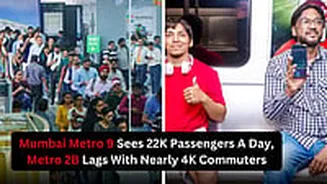
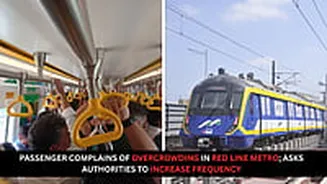
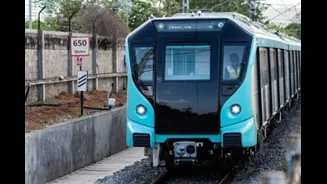
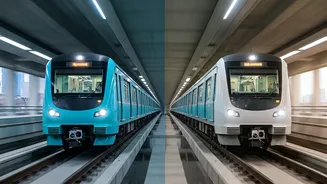
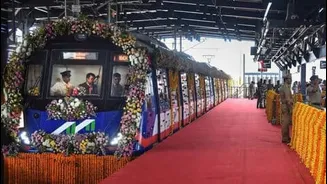
In the inaugural week of operation, Mumbai's newest metro corridors have presented a stark contrast in passenger engagement. Metro Line 9, connecting Dahisar
East to Mira Road across its four stations, has quickly become a popular choice for commuters, averaging an impressive 23,096 daily passengers. In sharp contrast, Metro Line 2B, which spans five stations from Mandale to Diamond Garden, has struggled to attract riders, registering a mere 3,992 daily passengers on average. This significant difference in uptake highlights varying levels of immediate public adoption for the new transit routes, prompting an examination of the underlying causes for this divergence in ridership figures.
Seasonal Factors at Play
Authorities have pointed to the current period of summer vacations as a primary contributor to the lower passenger numbers observed on Line 2B and, to a lesser extent, on other established metro lines. During this time, a reduction in daily commuters is a predictable trend as fewer individuals travel for work and school. This seasonal dip is also evident on older, more established lines like Line 2A, which typically serves an average of 1.53 lakh daily passengers, and Line 7, which sees 1.12 lakh daily commuters. Despite these lower figures during vacation periods, these older lines collectively managed to transport over 3 lakh passengers on weekdays in March, indicating a robust demand outside of holiday seasons.
Future Outlook and Growth
Metro Line 9, serving as a crucial extension to Line 7, had projected an ambitious daily ridership of between 50,000 and 1 lakh passengers, a target it is already showing strong potential to meet. Officials are optimistic that passenger numbers for Line 2B, and indeed for the entire network, are expected to see a substantial increase as the summer vacation period concludes and academic institutions and workplaces fully resume their operations. Furthermore, the onset of the monsoon season is also anticipated to boost ridership, as public transportation becomes a more reliable option for navigating the city. This expected surge indicates that the current figures may represent a temporary trend influenced by seasonal travel patterns.
Digital Ticketing Trends
The transition towards digital ticketing methods has been a significant trend observed during the initial phase of operations for the new metro lines. In the first week, paper tickets accounted for only 35 percent of all trips purchased, signaling a clear preference among commuters for modern, convenient ticketing solutions. Complementing this digital shift, a substantial number of National Common Mobility Cards (NCMC) were sold, with 3,844 units purchased during the same period. This strong uptake of NCMC cards suggests a growing acceptance and utilization of integrated transit payment systems, paving the way for a more seamless and efficient commuting experience across Mumbai's expanding metro network.