




Dravidian Roots & Cinema's Role
Dynastic politics isn't a new phenomenon in Tamil Nadu; it's a deeply ingrained aspect of the state's political identity, shaped by a blend of ideology,
organizational strength, and the potent influence of personality and inherited legacies. The very foundation of Dravidian politics played a crucial role in establishing this trend. Parties like the DMK grew beyond mere political entities to become significant socio-cultural movements, which naturally led to a centralization of leadership around key individuals and, subsequently, their families. This tendency was further amplified by the powerful presence of cinema in Tamil Nadu's culture. The transition from screenwriting prowess, as seen with M. Karunanidhi, to the widespread public adoration of figures like MGR and Jayalalithaa, created a dynamic where politics and personality-driven appeal were inextricably linked. This environment fostered a system where recognizable faces, and by extension, their family members, became the natural successors to accumulated political influence and capital, setting a precedent for future generations.
Current Election Manifestations
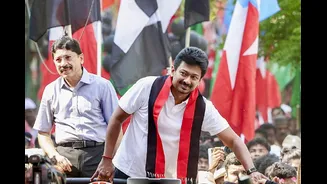
This long-standing pattern is vividly evident in the current electoral landscape, with prominent political families once again fielding their members. Chief Minister M. K. Stalin is seeking re-election from his current Kolathur constituency, demonstrating continuity. His son, Udhayanidhi Stalin, is contesting from Chepauk-Thiruvallikeni, further cementing the family's political presence in Chennai. Within the AIADMK, O. Panneerselvam is a candidate in Bodinayakanur, a significant seat in southern Tamil Nadu where his influence remains robust. The Pattali Makkal Katchi (PMK) also exemplifies this trend, with Sowmiya Anbumani, wife of Anbumani Ramadoss, filing her nomination from Dharmapuri. This widespread presence of family-linked candidacies across various parties underscores that dynastic politics in Tamil Nadu is not an isolated occurrence but a systemic feature permeating the state's electoral politics, transcending single political affiliations.
Criticism and Alternatives
Despite its historical prevalence, this model of dynastic politics is facing increasing scrutiny and opposition. Prime Minister Narendra Modi has consistently highlighted this issue during his campaign rallies in Tamil Nadu, arguing that it stifles opportunities for emerging grassroots leaders and potentially undermines effective governance. During a recent public address in the state, he sharply criticized what he termed "family-run parties," positioning the Bharatiya Janata Party (BJP) as a viable alternative to established political dynasties. Echoing similar sentiments, AIADMK leader Edappadi K. Palaniswami has also addressed this concern in his campaign outreach. He has contended that dynastic politics impedes internal party democracy and obstructs the development of new leadership within political outfits, even as certain factions within the AIADMK themselves continue to be influenced by family-based political networks.