





DMK's Core Narrative
For the ongoing Tamil Nadu elections, the Dravida Munnetra Kazhagam (DMK) has ardently focused on framing the contest as a conflict between 'Tamil Nadu and
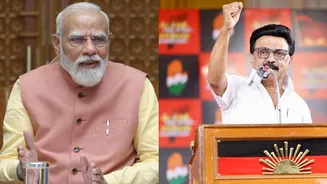
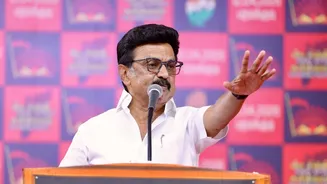
Delhi.' This strategy, consistently employed since 2019, involves disseminating accusations that the Bharatiya Janata Party (BJP) poses an existential threat to the state's distinct identity. Furthermore, the DMK has labeled the All India Anna Dravida Munnetra Kazhagam (AIADMK) as subservient to the BJP, positioning the DMK as the sole bulwark against the central government's influence. This approach, coupled with the Stalin administration's welfare initiatives and manifesto pledges, forms the cornerstone of the DMK's campaign. The objective has been twofold: to sideline actor Vijay's Tamilaga Vettri Kazhagam (TVK) from political discourse and to perpetuate the 'Centre vs. State' friction that has proven electorally advantageous in previous elections like 2019, 2021, and 2024.
Narrative Fatigue and AIADMK Resilience
The DMK's dominant 'Centre vs. State' narrative, having been the primary theme for three consecutive election cycles, was beginning to show signs of weariness. This prolonged focus on a singular issue was creating an opening for local concerns and regional dynamics to gain prominence. The emergence of actor Vijay's TVK party was also introducing a disruptive element, potentially challenging the established political order. Simultaneously, the AIADMK's organizational machinery was displaying renewed vigor, suggesting a capacity to mount a more formidable challenge than anticipated. These developments were reportedly causing unease within the DMK, as their carefully constructed campaign narrative was facing potential erosion from both new political entrants and a resurgent traditional opposition.
Delimitation's Timely Arrival
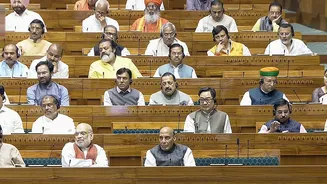
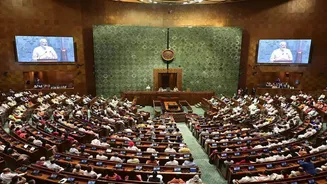
It is within this context of perceived electoral vulnerability that the delimitation debate has resurfaced, presenting what many analysts perceive as a 'perfect storm' for the DMK. The timing of a special parliamentary session to address delimitation has surprised numerous observers in Tamil Nadu, given the profound impact such proceedings could have on the state's electoral dynamics. This issue provides fresh impetus to a political narrative that was experiencing a decline in its effectiveness. The DMK has demonstrated a remarkable aptitude for framing such developments as irrefutable evidence of central government 'discrimination against the state.' Consequently, how the central government articulates its stance and how these pronouncements are interpreted amidst the fervent election atmosphere in Tamil Nadu are expected to diverge significantly.
Shifting Electoral Battleground
The delimitation debate has the significant effect of repositioning the electoral contest squarely as a direct confrontation between the DMK and the BJP. This development leaves the AIADMK in a considerably disadvantaged and disconcerted position. The DMK's strategy extends beyond merely addressing delimitation; it actively seeks to cultivate a broader narrative of distrust towards the central government. Key arguments being advanced by the DMK include the absence of explicit assurances within the proposed legislation regarding the formula for seat increases across states, a fundamental lack of trust in the central government's intentions, suspicion surrounding the timing of the bill amidst ongoing elections, and the DMK's self-proclaimed role as the primary force galvanizing opposition against this bill.
Bill Details and Concerns
The proposed legislation by the central government aims to increase the total number of seats in Parliament from the current 543 to 850. While the bill itself does not contain any written guarantees or a defined formula for a proportionate increase in seats for each state, the government has indicated in Parliament that it will offer an assurance of a 'uniform 50% increase' applicable to all states, rather than basing the increase on population figures. However, this assurance is subject to debate, as it potentially undermines the principle of equitable representation for all citizens. The underlying reasons for this proposed increase and the apparent haste with which it is being pursued remain unclear. These complex arguments are unlikely to be fully grasped or debated meaningfully amidst the emotionally charged environment of election campaigning. At this juncture, the issue is more likely to fuel emotion and political propaganda than to foster a carefully considered discussion on a matter of significant consequence for India's democratic future.
Impact on Opposition Parties
The sudden arrival of the delimitation bill poses a considerable challenge to opposition parties, particularly the AIADMK. A strategist from the AIADMK had previously expressed confidence that the bill would not be introduced, and its subsequent appearance has negatively impacted the party, especially given the DMK's persistent accusations of capitulation to the BJP under Edappadi K. Palaniswami. Furthermore, the delimitation issue has the potential to marginalize actor Vijay's TVK from the central election discourse. This development enables the DMK to solidify its political standing and provides a tangible, grassroots-level argument to divert attention from Vijay's entry into politics. While this may not diminish Vijay's fan base or personal appeal, it serves to prevent the erosion of the DMK's core voter base and offers a compelling reason for undecided voters to return to their fold. In a closely contested election, these strategic advantages could prove decisive for the DMK.