


Cover Your Pots
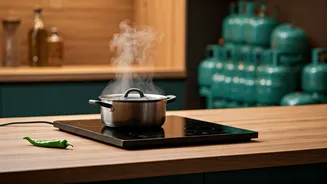
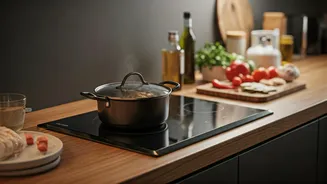
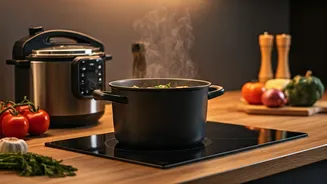
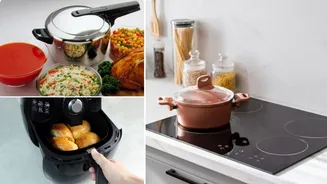
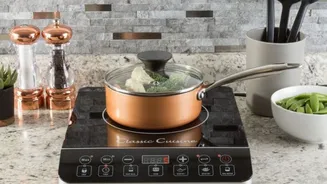
A fundamental yet highly effective method to conserve LPG involves consistently covering your cooking vessels with a lid. This simple act traps essential
heat and steam within the pot, accelerating the cooking process and promoting more uniform heat distribution to your food. When lids are omitted, heat dissipates freely, compelling your stove to remain active for extended periods, thus consuming a greater volume of cooking gas. By ensuring your pots and pans are always covered during use, you can noticeably reduce the overall cooking duration and make a substantial saving on your LPG consumption.
Match Burner to Pot
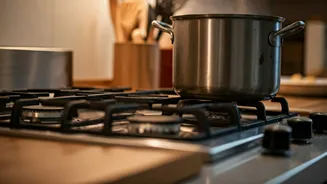
Many gas stoves feature burners of varying sizes, yet it's common to see individuals defaulting to the largest burner irrespective of the cookware's dimensions. Employing a large burner for smaller pots is an inefficient practice, as the flame extends significantly beyond the pot's base, allowing substantial heat to escape unused. To optimize gas usage, it's advisable to utilize the smaller burner for diminutive pans and reserve the larger burner exclusively for larger vessels or more demanding cooking tasks that require higher heat intensity.
Pre-Soak Ingredients
Significantly reducing your gas expenditure can be achieved by adopting the practice of soaking staples like rice, lentils, and various legumes prior to their cooking. These food items, when allowed to absorb water in advance, become softer and subsequently require considerably less time and heat to cook on the stovetop. Even a short soaking period of approximately 30 minutes to an hour can dramatically decrease the cooking time, leading to savings in both your valuable time and your LPG supply.
Smaller Vegetable Cuts
The physical size of the vegetables you are preparing plays a crucial role in the duration they need to spend on the heat. Larger pieces naturally take longer to soften and become tender, thereby demanding more time on the flame and consuming additional gas. By opting to cut your vegetables into smaller, uniform pieces, you facilitate a quicker and more even cooking process, thereby minimizing the quantity of LPG required to prepare your meals.
Batch Cooking Strategy
Repeatedly igniting your stove throughout the day for individual dishes can inadvertently lead to higher gas consumption than necessary. A more efficient approach involves strategic meal planning to cook multiple dishes concurrently. For instance, you could prepare your vegetable curry, rice, and dal in a single cooking session, rather than staggering their preparation at different times, thereby optimizing your gas usage.
Simmer After Boiling
A common error in cooking is maintaining a high flame even after the liquid has reached a rolling boil. Once boiling point is achieved, reducing the flame to a gentle simmer is typically sufficient to continue the cooking process effectively. Continuing to use a high flame at this stage offers no discernible advantage in speeding up the cooking and merely results in the unnecessary wastage of LPG.
Maintain Clean Burners
The operational efficiency of your gas stove is directly impacted by the cleanliness of its burners. Accumulated food debris and grease can obstruct the small holes in the burners, leading to uneven flame distribution and inefficient gas combustion. Regular cleaning of your burners is essential to ensure a consistent, steady blue flame, which is indicative of optimal gas efficiency and effective cooking.
Match Pot to Flame
Another frequent oversight involves using cookware that is disproportionately small for the size of the burner's flame. When the flame flares up and extends beyond the base of the pot, a significant amount of heat is lost to the surrounding atmosphere, rendering it unproductive for cooking. Selecting cookware that appropriately matches the burner's dimensions ensures that the heat is channeled effectively towards the food, maximizing cooking efficiency.
Flat Cookware Advantage
Cookware featuring a flat base offers superior heat absorption compared to vessels with rounded bottoms. These flat-bottomed pots and pans sit evenly on the stove, allowing heat to distribute uniformly across the entire base. This enhanced heat transfer promotes faster cooking and requires a reduced amount of LPG to achieve the desired results.
Residual Heat Cooking
Many dishes continue to cook even after the gas is turned off, thanks to the residual heat retained within the cookware. By strategically switching off the flame a minute or two before your dish is completely finished, you can leverage this leftover heat to complete the cooking process. This technique not only conserves LPG but also ensures your food is perfectly cooked.