





TMC's Strong Allegations Emerge
Late on a Thursday night, the political landscape in Kolkata was abuzz with accusations from the Trinamool Congress (TMC) regarding alleged irregularities
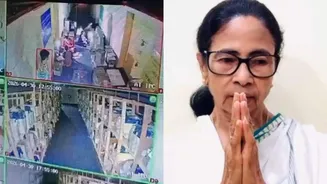
with Electronic Voting Machines (EVMs). This high-stakes drama unfolded shortly after Chief Minister Mamata Banerjee's call for her party members to remain vigilant around EVM strong rooms. Prominent TMC candidates, including Kunal Ghosh and Shashi Panja, along with numerous party workers, gathered at theKhudiram Anushilan Kendra, protesting and alleging that EVMs had been tampered with. Their concerns were amplified by claims that CCTV footage appeared to show ballot boxes being opened without the necessary authorization from representatives of various political parties. This contentious situation prompted the arrival of Bharatiya Janata Party (BJP) candidates at the same location, intensifying the charged atmosphere. The TMC officially voiced its accusations on the social media platform X, portraying the situation as a significant blow to democratic principles, alleging a conspiracy between the BJP and the Election Commission to manipulate the ballot boxes and EVMs, deeming it a "murder of democracy in broad daylight."
Chief Minister's Vigil
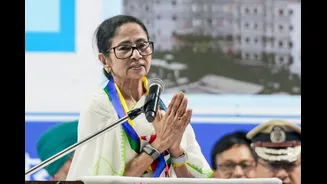
Adding to the night's intensity, Chief Minister Mamata Banerjee herself made a visit to the Sakhawat Memorial Girls High School, which serves as a strong room for EVMs pertaining to her constituency, Bhabanipur. She arrived at 8:15 pm and maintained her presence until the stroke of midnight, keeping a close watch on the proceedings. Outside the school, supporters from both the TMC and the BJP congregated, creating a scene that necessitated a significant police presence. Reflecting on her four-hour vigil, Banerjee stated her request for proper facilities for candidates and election agents, emphasizing her purpose to observe closely. She mentioned witnessing the opening of EVMs at the Netaji Indoor Stadium, which prompted her to visit the Bhabanipur strong room for verification. Initially, she faced hindrances to her entry but was eventually permitted by the Returning Officer. Banerjee expressed her determination to prevent any forceful capture of votes within a democratic framework, highlighting that while she could have mobilized thousands of supporters, she chose not to, opting instead for a more focused observation.
Officials Refute Claims
In response to the mounting allegations from the TMC, election officials categorically rejected the claims of EVM tampering. Manoj Agarwal, the Chief Electoral Officer (CEO), addressed the accusations, stating that "nothing has been done out of the statutory procedure of ECI" and characterizing the allegations as "baseless." He further indicated that a report was being sought, and stern action would be taken against anyone found to be violating legal procedures. Smita Pandey, the District Election Officer of North Kolkata, provided further clarification. She assured that all EVMs were securely sealed and stored within the strong room, with their status visible via installed CCTV cameras. Pandey explained that the activity observed at the Khudiram Anushilan Kendra involved the segregation of postal ballots, a process that typically occurs in a designated room or corridor. She asserted that all political parties had been duly informed about this segregation process, scheduled to commence from 4 pm. Following the TMC's allegations, officials accompanied the protesting candidates to demonstrate that the entire procedure was conducted in strict accordance with the Election Commission's Standard Operating Procedures (SOP), with no breaches of the strong room. All actions were reportedly recorded.
Enhanced Security Measures
The Election Commission of India (ECI) had, prior to these events, implemented enhanced security measures aimed at bolstering the integrity of counting centers. Notably, a QR code-based ID system was introduced to prevent unauthorized access. The ECI issued a press note detailing these new protocols, designed to eliminate the possibility of unauthorized individuals entering counting venues. This system integrates a QR code-based Photo Identity Card module into ECINET. A comprehensive three-tier security mechanism was established for identity verification at counting centers. The initial two tiers involved manual checks of Photo Identity Cards issued by the Returning Officers. The third and innermost security cordon, situated closest to the counting halls, required entry only after a successful verification via QR code scanning. The new QR code-based Photo Identity Cards were designated for all individuals authorized by the ECI to enter counting centers and halls, a group that included Returning Officers, Assistant Returning Officers, counting staff, technical personnel, candidates, election agents, and counting agents, among others.