







What Are Eyelid Deposits?
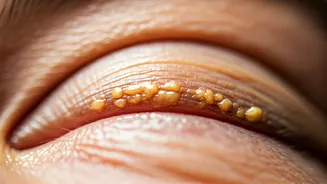
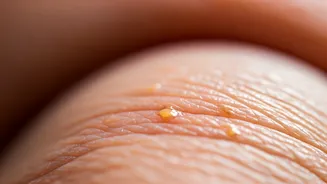
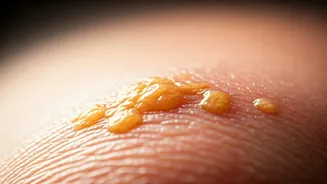
Xanthelasma, characterized by small, yellowish deposits appearing on the eyelids, are accumulations of cholesterol and fats beneath the skin. While they
typically don't cause discomfort, their presence can be a significant indicator of deeper health concerns, particularly relating to cholesterol regulation and cardiovascular well-being. These formations are more prevalent in women and often emerge after the age of 40. Although xanthelasma itself is benign, it can signal an increased susceptibility to heart disease. This link arises because elevated cholesterol levels, which contribute to xanthelasma, are also a primary risk factor for serious cardiac events like heart attacks and strokes. Consequently, noticing these waxy, yellow bumps necessitates a medical consultation to assess cholesterol profiles and overall heart health, potentially leading to necessary lifestyle adjustments or treatments.
The Heart Disease Connection
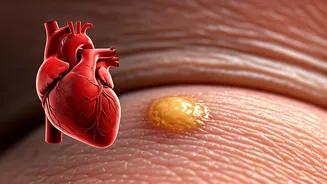
The appearance of xanthelasma serves as a potent visual cue for underlying cardiovascular risks, suggesting the potential presence of subclinical atherosclerosis—a silent build-up of plaque in the arteries. These yellowish plaques, formed by cholesterol deposits under the skin, often manifest near the inner corners of the eyelids due to the skin's thinness and rich vascularity, making them an early site for lipid visibility. Dr. G Dimpu Edwin Jonathan, an Interventional Cardiologist, explains that xanthelasma frequently acts not just as a localized skin condition, but as a marker for systemic cholesterol imbalances. This visible sign can indeed signal an elevated risk of heart attack and cardiovascular disease, particularly if they appear early in life or worsen over time. Research consistently shows a higher likelihood of coronary artery disease, myocardial infarction, and stroke in individuals with xanthelasma, even preceding overt symptoms. Therefore, these deposits can be seen as an external warning from the body about internal vascular risks.
Unpacking the Risk Factors
The association between xanthelasma and increased cardiovascular risk is well-established and clinically significant. Intriguingly, this heightened risk appears to be independent of common contributing factors like age, smoking habits, or even standard cholesterol measurements. Dr. Jonathan posits that xanthelasma reflects cholesterol deposition within the blood vessel walls, mirroring the plaque formation seen in coronary arteries, thus suggesting accelerated vascular aging. This means arterial plaque might be developing silently. The significance of xanthelasma is underscored by its ability to appear even when routine cholesterol tests yield normal results. This can point to less obvious issues such as altered cholesterol particle characteristics or function not detected by basic tests, hereditary lipid disorders, reduced efficiency of HDL cholesterol, or heightened inflammation and endothelial dysfunction. This highlights that 'normal' cholesterol numbers don't always equate to a low risk profile.
Comprehensive Health Assessment
For individuals who develop xanthelasma, a thorough cardiovascular evaluation is strongly advised. This comprehensive assessment goes beyond standard checks to identify potential silent atherosclerosis before it leads to a critical event. Recommended tests often include a fasting lipid panel, alongside more advanced lipid testing like LDL particle number, ApoB, and Lp(a). Additionally, blood sugar levels (including HbA1c), blood pressure, and high-sensitivity CRP are evaluated. Depending on clinical indications, an ECG or echocardiogram may be performed. In select cases, a Coronary Artery Calcium (CAC) score might be beneficial, and a detailed family history is crucial. The primary objective of this extensive screening is to detect any nascent arterial disease early, thereby enabling proactive management and reducing the likelihood of future heart attacks.
Addressing the Symptom vs. Cause
It is crucial to understand that cosmetic removal of xanthelasma only addresses the visible manifestation and does not rectify the underlying health issues driving their formation. Dr. Jonathan emphasizes that the elevated cardiovascular risk persists unless the metabolic or vascular abnormalities are effectively managed. Without addressing the root cause, xanthelasma may reappear, especially if cholesterol imbalances continue. Furthermore, the procedures for removal, such as topical creams, laser therapy, or surgical excision, can carry their own set of side effects. These might include alterations in skin pigmentation, scarring, discomfort, or in rare instances, distortion of the eyelid's appearance. Therefore, while aesthetically bothersome, the primary focus should always remain on managing the internal health factors indicated by these yellow eyelid deposits.