





Unconventional Beginnings
Amrinder Singh, a 42-year-old from Gunno Majra village in Mohali, embarked on a path far removed from traditional farming. Armed with a Master's degree
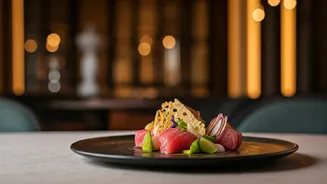
in Physics from the early 2000s, he initially ventured into the laboratory equipment business in Bengaluru. It was in the bustling southern city that he noticed the widespread use of exotic vegetables and premium greens in fast-food establishments and international cuisines. This observation sparked an idea: to return to his native Punjab and introduce these high-demand crops, departing from the region's conventional agricultural practices. He decided to prioritize what the market craved over time-honored crops, a novel concept for many local farmers at the time. This foresight led him to begin experimenting on a modest one-acre plot with produce like lettuce and other specialty greens, gradually expanding his operations to encompass his entire 6.5 acres of farmland by the 2014-15 period.
A Spectrum of Greens
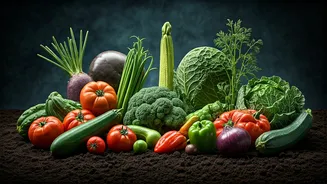
Today, Amrinder's farm is a vibrant showcase of high-value crops rarely cultivated in Punjab. His fields yield an impressive array of produce, including popular items like lettuce, rocket leaves (arugula), basil, leek, kale, parsley, and celery. He also cultivates colorful varieties of broccoli, cauliflower, and cabbage. This diverse selection allows him to cater to a specialized, yet rapidly expanding, market segment: the premium hospitality and food service industries. These exotic greens are no longer confined to simple salads; they find application in various culinary creations. Bakeries, for instance, utilize rocket and basil leaves for decorative purposes on cakes, while restaurants integrate kale, parsley, and celery into a wide range of dishes, highlighting their versatility and growing demand across different food sectors.
Lucrative Yields & Planning
The transition to exotic vegetable cultivation has proven exceptionally profitable for Amrinder. His produce commands prices ranging from Rs 150 to Rs 350 per kilogram, contingent on factors like quality and market demand. Specific high-demand crops, such as Korean onion, bell peppers, and seedless cucumber, are capable of generating an impressive Rs 10–12 lakh per acre. With the implementation of two distinct cropping cycles annually, his total revenue reaches a significant Rs 60–70 lakh after accounting for all operational expenses. The farm's infrastructure is a testament to meticulous planning; one acre is dedicated to bell peppers grown within a protective polyhouse, while the remaining 5.5 acres are utilized for open-field cultivation. These distinct areas are strategically allocated to specific crops, ensuring both a diverse yield and operational efficiency throughout the year.
Meticulous Cultivation Cycles
Amrinder's remarkable success is deeply rooted in precise planning and the application of scientific farming methodologies. He has established his own comprehensive nursery system, meticulously raising seedlings on-site before they are carefully transplanted into the fields. To ensure a consistent and uninterrupted supply of produce, he strategically staggers his crop cycles. For example, rocket leaves have a relatively short maturation period, ready for harvest within 35–40 days, and can be repeatedly cut every few weeks for up to a six-month span. Similarly, crops like lettuce and spring onions require a longer growth phase, typically taking five to six months from the nursery stage to full harvest. Seasonal vegetables, such as broccoli and cabbage, are harvested between January and April. Amrinder emphasizes that this continuous rotation of different varieties throughout the year is crucial for maintaining a steady flow of production and ensuring consistent income streams, transforming his farm into a dynamic, year-round operation.
Market Reach & Challenges
The primary clientele for Amrinder's premium produce comprises hotels, restaurants, and bakeries situated within the tri-city region of Chandigarh, Mohali, and Panchkula. His distribution network also extends to major cities like Ludhiana, Delhi, and Jammu. While he also operates a retail outlet named 'Exotic Cart' in Chandigarh, the bulk supply to institutional buyers remains the cornerstone of his business. To preserve the freshness and visual appeal—critical for discerning premium buyers—his leafy produce is carefully harvested and packaged in small, specialized boxes. The journey from conventional farming to cultivating exotic varieties has presented its share of hurdles. This venture demands significant labor input, a keen understanding of market dynamics, and unwavering commitment to maintaining high-quality standards. Amrinder currently employs four permanent staff members and recruits additional temporary labor during peak harvesting seasons. He acknowledges the physically demanding nature of the work but finds the substantial financial returns to be a significant motivator.
Future of Farming
Coming from a background steeped in traditional agriculture, Amrinder firmly believes his innovative model represents a viable and promising future for farming in regions like Punjab. Many farmers currently grapple with increasing input costs and stagnant prices for staple crops like wheat and paddy, making it challenging to achieve sustained profitability. His firsthand experience strongly suggests that diversifying agricultural practices and aligning with evolving consumer preferences can lead to a substantial improvement in farmer incomes. He recalls realizing early on that the returns from his chosen crops were multiple times higher than those from traditional staples. Amrinder is ambitiously working towards his goal of generating over Rs 1 crore in revenue from the same land, demonstrating the immense potential of smart, market-driven agriculture.