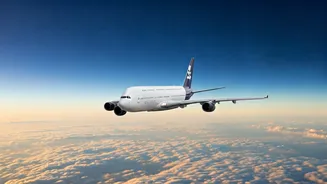

Enduring the Skies
The realm of air travel is constantly evolving, with airlines continually pushing the boundaries of what is possible. One fascinating aspect is the duration
of flights, particularly those connecting distant corners of the world. Several non-stop routes have emerged, demanding extraordinary endurance from both passengers and the aircraft themselves. These ultra-long-haul flights are a testament to technological advancements in aircraft design and fuel efficiency, allowing for journeys that were once unimaginable. Some of these routes can take up to, or even beyond, 19 hours to complete. These marathons in the sky offer passengers the unique experience of traversing vast distances without the interruption of layovers, but they also bring their own set of challenges, including extended periods of confinement and the potential for jet lag. As the demand for convenient and efficient travel grows, these lengthy flights are likely to become increasingly common, reshaping how we perceive global connectivity.
Auckland to Doha
This flight route connects Auckland, New Zealand, with Doha, Qatar. This transcontinental journey is a testament to the capabilities of modern aviation, enabling passengers to traverse immense distances in a single, non-stop flight. The route underscores the increasing globalization of travel, with airlines striving to provide more convenient and efficient connections between major international hubs. The duration of this flight often stretches for considerable amount of time, positioning it as a demanding option for travelers. Passengers embarking on this route should prepare for a long stay within the confines of an aircraft, making it crucial to plan for comfort and entertainment to stay occupied. This flight showcases the ongoing evolution of air travel. It aims at streamlining journeys and fostering connections across the globe. It also offers passengers a taste of the future of travel, where geographical constraints are increasingly minimized.
Perth to London
Flying between Perth, Australia, and London, United Kingdom, has emerged as a significant flight route. This route represents a crucial link for travelers, connecting Australia with Europe. Its significance lies in the efficient point-to-point travel it provides, eliminating the need for layovers in other hubs. The duration of this journey is substantial, reflecting the considerable geographical distance that it covers. Passengers traveling on this route should anticipate extended periods in the air, requiring careful planning to manage comfort and well-being during the flight. This route highlights how air travel has revolutionized global connectivity and made the world a smaller place, allowing passengers to move between continents with relative ease. It stands as a symbol of the capacity of airlines to offer innovative, efficient connections that have redefined international travel, shaping expectations for comfort and convenience in long-haul journeys.
Singapore to New York
Connecting Singapore and New York, this flight is a vital route. It demonstrates the ability to link two major global hubs. The non-stop nature of the flight provides a streamlined experience for travelers, reducing travel time and enhancing overall convenience. Spanning a considerable distance, the flight typically demands a significant duration, reflecting the vast geographical separation between these two cities. Passengers on this route should prepare for extended periods in the air. This includes arranging comfortable seating options, appropriate in-flight entertainment, and other essentials to enhance the experience. It exemplifies how advancements in aircraft technology and operational strategies are transforming long-distance travel and shaping expectations for connectivity. Airlines are now focusing on providing streamlined and comfortable services, enhancing their offerings to meet the growing demands of modern travelers.
Dallas to Melbourne
The flight route from Dallas, in the United States, to Melbourne, Australia, showcases how international travel has evolved. It signifies an increasingly globalized world, allowing for a single point-to-point journey. The route is important for providing efficient connectivity between these cities, cutting out layovers and reducing travel time for passengers. It involves a substantial duration, reflecting the considerable distance between the two destinations. Passengers should prepare for a lengthy time in the air, requiring strategic planning for comfort and enjoyment during the flight. This route is an indicator of the changing landscape of air travel, demonstrating how technology and operational efficiency are continuously enhancing long-distance journeys. It also highlights the growing demand for convenient and direct routes, pushing airlines to adapt and innovate to better meet passenger needs and expectations in modern travel.