







Birth of a Legend
The Udyan Abha Toofan Express, initially launched on June 1, 1930, during British rule, was a groundbreaking achievement in Indian railway history. It
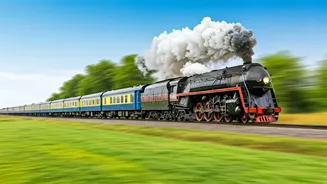
covered a 1,978-kilometer route linking Howrah and Sri Ganganagar. In an era when rail travel was generally slow and unreliable, the Toofan Express stood out, quickly gaining a reputation for its swiftness and dependability. This reputation was so profound that passengers themselves christened it the 'Toofan Express,' a moniker later officially adopted by the Railways. The train's early success set the stage for its long-lasting legacy and cultural significance.
The Journey Unfolds
Over the decades, the Toofan Express became an essential link between the eastern and north-western regions of India, traversing eight states and connecting major population centers and railway junctions. Its route encompassed West Bengal, Jharkhand, Bihar, Uttar Pradesh, Delhi, Haryana, Punjab, and Rajasthan. Initially, the train made stops at just a few stations, but as demand grew and railway infrastructure improved, the number of stations it served expanded to approximately 110. Key destinations along its route included significant junctions like Howrah Junction, Patna Junction, New Delhi, and Kanpur Central, facilitating vital transportation and trade across the country. The journey from Howrah to Sri Ganganagar typically took 45 hours and 25 minutes, while the return trip was slightly longer, clocking in at 46 hours and 20 minutes.
Speed and Symbolism
The Toofan Express was celebrated not only for its extensive route but also for its remarkable speed. It boasted a maximum speed of 110 kilometers per hour, maintaining an average speed of 44 kilometers per hour. This velocity was considered exceptionally fast for its time, and it contributed to the train’s popularity. The train's swiftness and cultural impact were so significant that they inspired at least three films between 1930 and 1940. These films, titled 'Toofan Mail' and 'Toofan Express,' reflected the train's iconic status and symbolized its speed and influence on popular culture, further cementing its legacy.
The End of Era
The Toofan Express's remarkable run of nearly 90 years eventually met its end during the onset of the COVID-19 pandemic. In March 2020, amid a nationwide lockdown, the train, like many other long-distance services, was temporarily suspended. The Eastern Railway made the definitive decision to permanently cancel the service on May 19 of the same year. The absence of the Toofan Express in the revised railway timetable issued on October 1, 2022, confirmed that its retirement was final. Despite demands from Members of Parliament and regular passengers for its revival, the Railways did not announce any plans to reinstate the train, effectively closing the chapter on one of the Indian Railways' longest-running services.