





Origins and History
Pongal, a four-day harvest festival, carries deep historical roots dating back to ancient times. It is a festival celebrated in Tamil Nadu to express gratitude
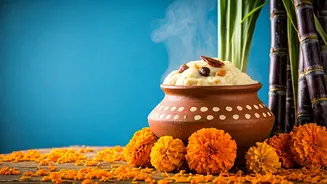
to nature, especially the sun, for a bountiful harvest. The festival's name, 'Pongal,' also refers to a dish of sweet rice boiled in milk, which symbolizes prosperity. Pongal's origins are closely tied to the agrarian society of Tamil Nadu, where farmers depended on the sun, rain, and earth for their livelihood. Over time, the festival evolved, incorporating rituals and traditions that reflect the cultural values and beliefs of the people. It has become a significant celebration, uniting families and communities in a shared sense of joy and thanksgiving for the blessings of nature. The historical context reflects a blend of religious beliefs and agricultural practices, evolving into the vibrant celebration known today.
The Four Festive Days
Pongal unfolds over four days, each carrying distinct significance and rituals. The first day, Bhogi Pongal, is dedicated to discarding old belongings and starting anew. Homes are cleaned, and unwanted items are burned in a bonfire, symbolizing a fresh start. The second day, Thai Pongal, is the main event. It involves the cooking of 'Pongal' in a new earthen pot, with milk and rice overflowing, representing abundance. The sun is revered with prayers and offerings. The third day, Mattu Pongal, honors cattle, which play a vital role in farming. Cows are adorned, and special rituals are performed to show respect for these animals. The final day, Kaanum Pongal, is a time for community gatherings, feasts, and visiting relatives. It's a day of merriment, celebrating the bonds of family and friendship, and the joy of a successful harvest. Each day weaves together agricultural traditions and cultural expressions, making Pongal a multifaceted celebration.
Rituals and Customs
Pongal is brimming with rituals and customs, each holding deep symbolic meaning. The preparation of the 'Pongal' dish is the heart of the celebration, cooked in a new pot under the sun. As the milk boils over, families shout 'Pongalo Pongal!', signifying prosperity and good luck. The decoration of homes with colorful kolam designs (rangoli) at the entrance to welcome prosperity is also important. Prayers and offerings are made to the sun god Surya, seeking blessings for a good harvest. On Mattu Pongal, cows are adorned with garlands, painted horns, and bells, and are led through the villages in a procession. Various games and competitions like Jallikattu (bull-taming) are also organized to show valor and strength. These practices reflect the people's reverence for nature, gratitude for the harvest, and their community bonds. These rituals create a tapestry of traditions, weaving together faith, festivity, and the agrarian spirit of Tamil Nadu.
Significance of Pongal
Pongal holds immense significance, representing more than just a harvest festival; it embodies cultural identity, gratitude, and community unity. It is a time when farmers give thanks to nature for a successful harvest, acknowledging the blessings of the sun, rain, and earth. The festival underscores the importance of agriculture in Tamil Nadu's culture and economy. It strengthens family bonds as relatives come together to celebrate and share meals. The rituals and customs of Pongal symbolize renewal, prosperity, and the discarding of old sorrows to welcome new beginnings. It also celebrates the harmonious relationship between humans and nature. Pongal is thus a celebration of life, abundance, and the enduring traditions that shape the Tamil community.
Pongal Celebrations in 2026
In 2026, Pongal promises to be a vibrant and joyous celebration, filled with traditional festivities. The celebrations will continue to highlight the importance of the harvest season and the cultural significance of the festival. Families and communities will come together to participate in rituals, cook traditional dishes, and exchange greetings. The festival is expected to draw large crowds, with local markets filled with festive items and decorations. Traditional performances, music, and dance will add to the festive atmosphere, bringing people together. Pongal 2026 will be a moment to celebrate the rich cultural heritage, traditions, and the strong community bonds that define this harvest festival. Expect to witness the same spirit of gratitude, joy, and togetherness that makes Pongal such a unique and cherished celebration.