





Early Skepticism Overcome
Throughout history, revolutionary inventions have often been met with skepticism and even derision before achieving widespread acceptance. Initial reactions
to groundbreaking concepts can be overwhelmingly negative, with people often resistant to change and clinging to familiar methods. The transition from dismissal to embracing an invention frequently involves overcoming significant hurdles, from technical challenges to public perception issues. Early adopters, often visionaries themselves, play a crucial role in championing these inventions and pushing them towards success, gradually convincing others of their value and potential. The evolution of various technologies demonstrates that initial negative responses do not necessarily predict their ultimate success, emphasizing the complex and often unpredictable nature of innovation.
The Telephone's Humility
When Alexander Graham Bell introduced the telephone, the initial response was far from enthusiastic, with many considering it a novelty or even a useless device. People struggled to see the practical value of a device that seemed to complicate communication rather than simplify it. Bell's invention was initially dismissed by many, highlighting the difficulties of imagining new communication methods. The public struggled to grasp the importance of instantaneous, long-distance voice communication, as it went against the prevailing norms of correspondence. The early adoption rates were slow. However, as the technology improved and the network expanded, its usefulness became undeniable, transforming into an essential tool for business, personal use, and ultimately, a foundational element of modern society.
The Lightbulb Controversy
Thomas Edison's lightbulb, now a symbol of progress, initially faced challenges that seem unbelievable today. Critics questioned its practicality, efficiency, and safety. There were concerns that the new technology would be unreliable and expensive. Many believed that gas lighting was sufficient and that the lightbulb presented unnecessary risks. Early adopters were also skeptical. The high cost of electricity and the limited availability of electrical infrastructure further hindered adoption. However, Edison persevered, improving his invention and developing the infrastructure needed to support it. As the lightbulb became more reliable, efficient, and affordable, it quickly revolutionized society, extending working hours, enhancing safety, and fundamentally changing how people lived and interacted with their environment.
The Automobile's Challenges
The first automobiles, the predecessors of today's cars, received a mixed reception. The initial models were slow, unreliable, and expensive. People were concerned about the lack of roads and the safety risks associated with these new machines. The idea of traveling without horses was revolutionary and unsettling for many. Early vehicles were more of a curiosity than a necessity, with limited range and a scarcity of repair services. The early adopters, often wealthy individuals, faced the practical challenges of maintenance and the lack of established infrastructure. Yet, as engineering improved and manufacturing became more efficient, automobiles became more affordable and accessible. The automobile has gone through immense changes, transforming transportation and reshaping urban and rural landscapes in a manner that was unimaginable during its early development.
The Airplane's Skeptics
When the Wright brothers first took flight, their invention sparked both fascination and skepticism. Many doubted the practicality and safety of flying machines. The challenges of controlled flight, the limited power of early engines, and the lack of airports all contributed to the initial doubts. Skeptics pointed out that the idea of humans flying was unrealistic. The early aircraft were fragile, dangerous, and often unreliable. The early flights were more of a novelty than a practical means of transportation, causing the public to be reserved in the initial days. But, as engineering and technology advanced, the aircraft became more reliable, safer, and capable of covering longer distances. Air travel has since become commonplace, linking the world and enabling global travel and commerce.
The Computer's Resistance
Early computers, massive and complex machines, also faced resistance. Their size, cost, and complexity made them inaccessible to most people. Initial applications were primarily limited to specialized scientific and military purposes. Many were skeptical of their practicality outside of these niche applications. The early computers were expensive to build and maintain. The limitations of early software and the lack of a user-friendly interface made them difficult to operate and understand. However, as technology advanced and computers became smaller, faster, and more accessible, their potential was realized. Today, computers have become an essential part of nearly every aspect of life, revolutionizing communication, entertainment, education, and business.
The Digital Camera's Doubts
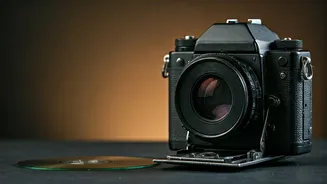
The introduction of the digital camera also faced significant initial resistance. Many professional photographers and consumers doubted the quality of digital images compared to traditional film. The early digital cameras produced images that were far inferior to those of film cameras. The high cost and the technical challenges of digital photography further hindered adoption. The industry professionals did not trust the image quality. However, as technology improved, the quality of digital images became comparable to, and eventually surpassed, film. The convenience and affordability of digital photography led to its widespread adoption, transforming the way people capture and share images.
The Internet's Uncertain Start
The internet, which has revolutionized global communication, was also met with skepticism in its early days. Many people struggled to see its value, considering it a niche technology with limited practical applications. Concerns about security, privacy, and accessibility were common. The early internet was slow and difficult to navigate. The lack of user-friendly interfaces, the limited content, and the high cost of access discouraged many people. However, as technology improved, the internet became more accessible, faster, and more user-friendly. The evolution of the internet has transformed the way people communicate, access information, conduct business, and interact with the world.