
Why Resistance Bands?
Resistance bands are incredibly useful fitness tools, especially during winter when outdoor activities become less appealing. They offer a diverse range
of exercises suitable for all fitness levels. Unlike weight machines, bands utilize your own body weight and provide variable resistance, meaning the tension increases as you stretch the band. This adaptability allows for progressive overload, where you can steadily increase the challenge of your workouts. Moreover, they are inexpensive, portable, and take up very little space. This makes them ideal for home workouts, allowing individuals to maintain their fitness regimen without needing a gym membership. Resistance bands are also beneficial for physical therapy and rehabilitation purposes, helping to restore strength and mobility after injuries.
Top Band Picks
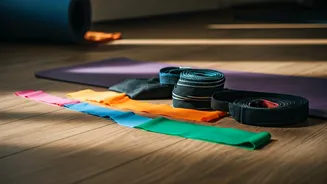
Several resistance bands have gained recognition for their effectiveness and user-friendliness. Many sets include a variety of bands, typically varying in resistance levels from light to extra heavy. This allows you to scale your workout based on your current fitness level and the specific exercise. Some popular features include loop bands, which are excellent for lower body exercises such as squats, glute bridges, and lateral walks. Tube bands often come with handles, enabling you to perform exercises that mimic movements you would do with dumbbells or weight machines. Other options include figure-eight bands, which are great for arm exercises, and bands that attach to doors for more advanced workouts. When choosing, consider the band's material, durability, and whether it includes any additional accessories that enhance exercise variety.
Working Out at Home
Home workouts with resistance bands can be incredibly efficient, providing a full-body workout in a small space. Start with a thorough warm-up to prepare your muscles for exercise. Utilize the bands to target various muscle groups: use loop bands for leg exercises such as squats, glute bridges, and lateral walks. For upper body strength, tube bands with handles offer a viable solution for bicep curls, tricep extensions, and shoulder presses. When using a door attachment, you can perform exercises like rows and chest presses, which mimic gym equipment. Ensure proper form for each exercise, focusing on controlled movements to maximize the workout's benefits and reduce the chance of injury. Remember to cool down and stretch after each session to promote flexibility and muscle recovery.
Band Safety Tips
Prioritizing safety is vital when using resistance bands. Always inspect the bands before each use for any signs of wear and tear, such as cracks, tears, or fraying, and if found, replace the bands immediately. Ensure the bands are securely anchored, particularly when attaching them to a door or other fixtures. Avoid overstretching the bands beyond their recommended limits, as this can lead to snapping. When performing exercises, maintain controlled movements to prevent any sudden jerks that could result in injury. If a band does break during exercise, it is important to release the tension slowly, moving away from it. It's useful to keep the bands away from direct sunlight and extreme temperatures, as these factors may degrade the material over time. Regular inspection and following these safety guidelines will help you safely incorporate resistance bands into your exercise routine.