






Beyond Mayem's Shores
Our quest for avian wonders led us away from the more developed Mayem Lake, which, despite its picnic spots and amusement activities, offered little in
the way of birdwatching. The initial disappointment at Mayem Lake, with its solitary cormorant and the intrusive presence of a bungee platform, was palpable. However, a hopeful tip from a security guard about a nearby birding haven, coupled with our driver's navigation skills, set us on a promising path. This detour through picturesque villages and alongside lush areca palm and coconut plantations eventually unveiled glistening waterbodies and the unmistakable, harmonious chorus of waterbirds. The journey itself, winding through the Goan countryside, hinted at the natural treasures that lay just beyond the usual tourist trails, transforming a potentially uneventful outing into an exciting exploration.
Swamphen Spectacle Unfolds
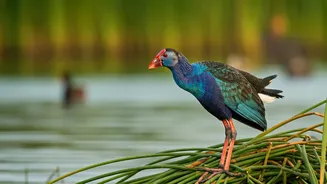
As we reached the large waterbody to the north, an astonishing sight greeted us: approximately 500 purple swamphens, a truly remarkable congregation, busily foraging for their morning meal. Their vibrant plumage shimmered, and while generally peaceable, occasional squabbles over territory added a touch of lively interaction to the scene. This was an unprecedented gathering of swamphens for us, highlighting the richness of this particular habitat. The avian diversity extended beyond the swamphens, with about a dozen Brahminy ducks, resplendent in their coppery-gold hues, preening themselves. Soon after, a flock of salt-and-pepper colored spot-billed ducks, familiar Indian residents, joined them, settling contentedly on the water. Towering egrets stood statuesquely, their pure white contrasting with the calm water, while graceful purple herons took to the air, their wings unfurling with regal elegance as they glided low over the surface, embodying the serenity of the wetlands.
Aerial Drama and Shoreline Wonders
The tranquil scene was punctuated by a sudden flurry of activity as the swamphens, startled, clumsily shifted across the water. Our immediate instinct was to look upwards for a predator, and indeed, an osprey was swiftly observed circling above, its keen eyes fixed on the water. Obscured momentarily by a tree, it executed a swift dive, emerging moments later with a fish clutched in its talons – a testament to its efficiency and hunting prowess. In the shallows, a stark contrast emerged with a solitary black-winged stilt, seemingly unfazed, standing amidst the swamphens. Further out, two more herons, possibly common pond herons, displayed hunched postures and gingery streaks, suggesting the presence of bitterns, though their preferred dense reed habitat wasn't immediately apparent. Adding to the visual spectacle, a flock of over a hundred sandpipers, a mesmerizing dance of white and brown, took flight, their synchronized movements over the water a breathtaking display before they seemed to vanish upon settling in the shallow edges.
An Ibis, Shrike, and Spoonbill Soiree
The avian gathering continued to grow as latecomers arrived for the morning's bounty. A group of glossy ibis, their feathers displaying iridescent black and deep chestnut tones, joined the fray, soon accompanied by a black-headed ibis. Their presence signaled the arrival of more distinguished guests: a quartet of spoonbills, their distinctive ladle-like bills diligently probing the water, engaging in what appeared to be 'minesweeping' for food. A young motorcyclist paused, expressing his delight at witnessing spoonbills, marking it as his first sighting of these unique birds in the area. Perched nearby, a little black cormorant maintained its sentinel duty from a tree branch, while a blue-tailed bee-eater, identified by its vibrant flame-blue tail after a sally, occupied a position below. This spot was later claimed by a long-tailed shrike, its 'executioner's mask' and hooked bill a clear indicator of its predatory nature, adding another layer to the rich biodiversity of the wetland.
Serenity and Courtship Displays
An overwhelming sense of peace enveloped the observer as the day's proceedings unfolded. Despite not being rare or exotic species, the collective presence of these birds in their natural environment evoked a profound appreciation for nature's effortless grandeur. As the observation period drew to a close, a pair of swamphens engaged in a ritualistic face-off, heads lowered—a behavior noted as a prelude to courtship. Although it was seemingly early for breeding, which typically occurs just before the monsoons, this interaction suggested youthful affection. The journey concluded with the lingering, evocative call of a red-wattled lapwing, its distinctive 'did-ye-do-it?' echoing in the distance, a final auditory imprint of the day's tranquil yet vibrant encounters. The drive back, through a more scenic forested route, offered fleeting glimpses of a white-necked stork, a final reminder of the hidden natural wonders that dot Goa's landscape.