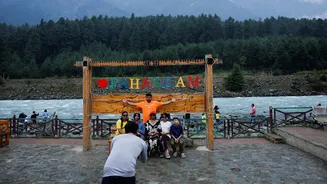








Echoes of Pahalgam
The events of April 22, 2025, in Pahalgam, particularly the Baisaran Meadow attack that tragically claimed 26 lives, have left an indelible mark on the perception
of Kashmir for many individuals from Pune. For young travelers like 18-year-old Kenneth Valerian Das, the attack redefined their mental map of the region. While the picturesque imagery of snow-capped mountains and serene houseboats persists, the incident introduced a palpable sense of unease, shifting preferences away from remote natural attractions. Instead of destinations like Pahalgam, families are now inclined to consider safer alternatives such as Himachal Pradesh or Uttarakhand, where the perceived risk is significantly lower. This sentiment highlights a collective re-evaluation of safety versus the allure of traditional tourist spots in the aftermath of a devastating civilian-targeted event.
New Safety Protocols
In response to the security concerns that have arisen following the Pahalgam incident, authorities have implemented enhanced safety measures aimed at restoring tourist confidence. A key initiative involves a comprehensive QR-code verification system for local service providers, including pony owners, guides, and taxi drivers. This system allows tourists to instantly access verified credentials and police-checked details, introducing a modern layer of accountability. While these measures are designed to mitigate risks and increase transparency, the complete restoration of confidence hinges on visible and consistent enforcement. For those with a low tolerance for risk, the advice is to remain patient and await further signs of sustained peace and security before planning a visit to the region.
Personal Hesitation
For many, particularly families, the lingering fear associated with the Pahalgam attack continues to influence their travel decisions, leading to a more cautious approach to visiting Kashmir. Anjali Deshpande, a 42-year-old school teacher, expresses this deep-seated personal hesitation, stating that while she wishes to visit, thoughts of her children often lead her to postpone the trip, hoping for at least another year of complete peace. Consequently, for the current travel season, her family has opted for destinations like Jammu and Ladakh. Similarly, Rahul Mehta, a software engineer, describes Kashmir as a place that rejuvenates the soul but admits that the fear remains fresh in their minds. His family is looking towards 2027 for a potential return, waiting for the vivid memory of the attack to gradually fade from public consciousness.
Contrasting Outlooks
Amidst the prevalent caution, there are individuals who remain undeterred and are actively planning trips to Kashmir, including Pahalgam. Meera Kulkarni, an entrepreneur from Pune, intends to visit Pahalgam with her family this season. Her perspective is that one cannot live perpetually in fear, and she is keen to personally assess the security measures in place and understand the local sentiment. By engaging with the local community and observing the situation firsthand, Kulkarni aims to form her own judgment about the current safety landscape. This proactive approach contrasts with the general hesitancy, highlighting a segment of travelers who are willing to explore the region despite the past events, driven by a desire to experience it for themselves and to support the local economy.
Shifting Travel Trends
The hesitations and renewed confidence are visibly impacting travel patterns originating from Pune. Alex Peter, owner of Fly Lemon Travel & Forex Pvt Ltd, observes a significant shift in how tourists are navigating Jammu and Kashmir. While the broader regions of Srinagar, Jammu, and Gulmarg are seeing continued interest, Pahalgam specifically is experiencing a dip in bookings. Currently, only a modest percentage, ranging from 20% to 37%, of their clientele includes Pahalgam in their itineraries. Furthermore, even for those who do visit Pahalgam, their stays are now typically limited to two to three days, a marked departure from the longer, more immersive retreats that were common previously. This trend indicates a localized caution towards Pahalgam, even as overall flight demand maintains high rates due to general tourism interest across India, though the high-end, long-stay segment in Pahalgam has been notably affected.