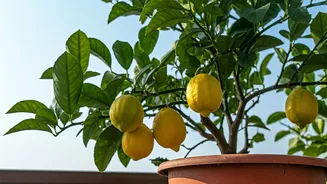








Choosing the Right Lemon
The first step to balcony lemon cultivation is selecting the correct lemon variety. Dwarf lemon varieties are exceptionally well-suited for container gardening
due to their compact size, enabling them to thrive in pots. Meyer lemons are a popular choice. They produce fruit almost year-round and are known for their sweeter, less acidic taste, and they have thin skin. Another good option is the Lisbon lemon, known for its high yield and tart flavour. When choosing a plant, look for healthy seedlings with robust foliage and no signs of disease. Consider the space available on your balcony and the amount of sunlight it receives when deciding on the size of the container and the lemon variety.
Container and Soil
Selecting the proper container and soil is crucial for successful lemon cultivation on your balcony. Choose a pot that is at least 15-20 gallons in size to provide enough space for root development. The container should have adequate drainage holes at the bottom to prevent waterlogging, which can be detrimental to the lemon tree. Terracotta pots are a good choice as they are porous and allow air circulation, however, plastic pots are also a viable option and tend to retain moisture better. For the soil, use a well-draining potting mix specifically formulated for citrus trees. You can also create your own mix, combining regular potting soil with perlite and compost. This mix provides the necessary nutrients while ensuring good drainage, which is vital for the health of your lemon tree. Avoid using garden soil directly, as it may compact and hinder root growth.
Sunlight and Watering
Lemon trees thrive in sunlight and need at least six to eight hours of direct sunlight each day. Position your container in a location on your balcony that receives ample sunlight throughout the day. If your balcony doesn’t get enough sunlight, consider using grow lights to supplement the lighting needs of your lemon tree. Watering is another essential aspect of lemon tree care. Water the tree thoroughly when the top inch of soil feels dry to the touch. The frequency of watering depends on the weather and the season. During the hot, dry months, you might need to water your lemon tree more frequently, possibly even daily. Reduce the watering during the cooler months when the tree's growth slows. Avoid overwatering, as this can lead to root rot. Make sure the container has adequate drainage.
Feeding Your Tree
Feeding your lemon tree regularly with the right nutrients is essential for healthy growth and fruit production. Citrus trees are heavy feeders and benefit from a balanced fertiliser specifically designed for citrus trees. Apply a slow-release fertiliser at the beginning of the growing season, and supplement with liquid fertiliser every few weeks. Follow the instructions on the fertiliser packaging carefully to avoid over-fertilising, which can damage the tree. Look for fertilisers that contain essential nutrients like nitrogen, phosphorus, and potassium, as well as micronutrients like iron and zinc. Fertilising helps maintain the health of the tree, boosts its ability to resist diseases, and promotes fruit development. Adjust your feeding schedule based on the age and health of your tree. Young trees might require a different balance of nutrients than mature, fruit-bearing trees.
Pruning and Pest Control
Regular pruning is important for maintaining the shape of your lemon tree and promoting fruit production. Prune your lemon tree during late winter or early spring before new growth begins. Remove any dead, diseased, or crossing branches. This will improve air circulation and allow sunlight to penetrate the tree’s canopy. Thin out dense areas to promote better fruit development. For pest control, regularly inspect your lemon tree for any signs of pests or diseases. Common pests that affect lemon trees include aphids, scale, and spider mites. If you notice any infestation, use organic pest control methods such as neem oil or insecticidal soap. Early detection and treatment are important to prevent pests from spreading and damaging your lemon tree. Consider introducing beneficial insects, like ladybugs, to help control pest populations naturally.
Harvesting Your Lemons
The time to harvest your lemons depends on the variety and the climate. Generally, lemons are ready to harvest when they have reached their full size and have developed their characteristic yellow colour. Gently twist the lemons from the branch to harvest them. Avoid pulling, as this can damage the tree. Lemons can be stored in the refrigerator for several weeks. Once the lemons are harvested, you can use them in various ways: squeeze them for juice, zest the rinds for flavour, or use the fruit in cooking and baking. Growing your own lemons offers a continuous supply of fresh, organic fruit. You can enjoy the satisfaction of using your home-grown lemons in your daily life, adding a special flavour to your meals and beverages.