





Barrier-Free Travel Begins
The Mundka-Bakkarwala toll plaza on Urban Extension Road (UER)-II in Delhi has undergone a significant transformation, marking a new chapter in India's
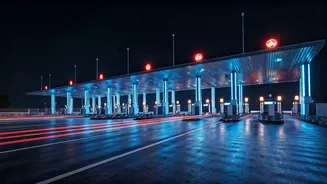
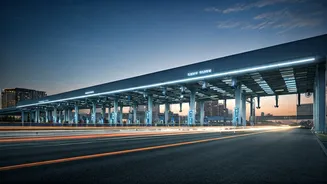
electronic toll collection (ETC) journey. On May 11, all 24 boom barriers were permanently raised, their associated fare displays, line cameras, signal lights, and FASTag readers deactivated. In their place, a sophisticated structure mounted on each lane's gantry now stands, equipped with three high-definition cameras and advanced FASTag readers. This innovation heralds the arrival of Delhi-NCR's inaugural, and India's second, Multi-Lane Free Flow (MLFF) barrier-less tolling system, signaling a future where stopping at toll plazas becomes a relic of the past. This pioneering system was officially unveiled by Union Minister of Road Transport and Highways, Nitin Gadkari, underscoring its importance in the nation's infrastructure development since ETC began in 2014.
Seamless Toll Deduction Tech
Gone are the days of halting your vehicle to pay tolls. The new MLFF system at Mundka-Bakkarwala utilizes a combination of high-performance Radio Frequency Identification (RFID) readers and Automatic Number Plate Recognition (ANPR) cameras. These technologies are strategically positioned on gantries above each lane. As vehicles pass through at speeds ranging from 80 to 100 kmph, the RFID readers capture FASTag information, while the ANPR cameras read vehicle registration numbers. This sophisticated integration allows for the automatic deduction of the appropriate toll amount directly from the linked FASTag account, ensuring a continuous flow of traffic without any need for vehicles to stop or slow down significantly.
Enhanced Efficiency and Savings
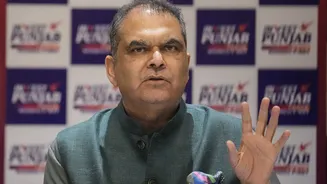
The implementation of the MLFF system is poised to deliver substantial improvements in operational efficiency and economic benefits. Union Minister Nitin Gadkari highlighted that the operational costs of running a traditional toll gate, which typically hover around 15% of collections, are projected to plummet to approximately 4% with this new technology. This reduction stems from the significantly minimized human intervention required. Furthermore, the barrier-free system is expected to curb leakages in toll collection and increase overall revenue. Commuters stand to gain immensely through saved time and fuel, as the long queues and waiting periods often experienced at toll plazas, sometimes exceeding an hour, will be eliminated. This translates to a more fluid and less stressful travel experience.
Rollout and Compliance Measures
The MLFF system is not entirely new to India; the first such barrier-less tolling system was operationalized on May 1, at the Choryasi toll plaza on the Surat-Bharuch section of NH-48 in Gujarat. To ensure the success and integrity of this system, particularly given its minimal human interaction, the government has implemented robust measures. These include the issuance of e-notices for instances of unpaid user fees. If a vehicle has an insufficient FASTag balance, or if the FASTag is invalid or non-functional, commuters will receive an e-notice. They then have a 72-hour window to make the payment; failure to comply within this timeframe will result in a doubled charge. These regulations are designed to prevent any loopholes and ensure accountability in toll payments, with positive early results indicating that a significant portion of users are adhering to the payment timelines.
Future Expansion Plans
The successful implementation of the barrier-free tolling system in Delhi and Gujarat is a precursor to a much wider rollout across the country. According to the Economic Survey 2025-26, the MLFF system is targeted for implementation on all national highways and expressways featuring four or more lanes by March 2029. To facilitate this expansion, the National Highways Authority of India (NHAI) has been actively working on securing contracts for new toll plazas. Contracts for 17 additional toll plazas have already been awarded, with the bidding process for another 108 currently underway, focusing on a region-wise approach. Out of the more than 1,300 toll plazas nationwide, approximately 700 are of the four-lane or more category, making them prime candidates for the MLFF upgrade. To bolster the system's accuracy, NHAI has also directed FASTag-issuing banks to promptly validate vehicle registration numbers linked to their FASTags and to blacklist any tags found with incorrect or invalid associations.