





Fuel Costs Soar
The cost of doing business has dramatically increased for Mumbai's street food vendors, primarily due to a significant surge in commercial Liquefied Petroleum
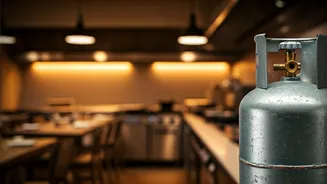
Gas (LPG) prices. Specifically, a substantial hike of ₹933 in the price of a 19-kg commercial LPG cylinder has pushed the cost to approximately ₹3,024 in Mumbai, as reported by oil marketing companies on May 1, 2026. This alarming increase follows a series of upward adjustments in March and April, reflecting the broader global energy market's instability. While domestic LPG cylinders for household use have maintained a relatively stable price point of around ₹913 for a 14.2-kg cylinder, it's the commercial users, including countless small food businesses, who are bearing the brunt of these escalating expenses. This disparity places an immense financial burden on those who form the backbone of the city's accessible and vibrant street food culture, forcing them to grapple with significantly reduced profit margins.
Vendor Struggles Mount
Across Mumbai, street food vendors are feeling the pinch, with many struggling to maintain their businesses. Vishal Gujjan, a chaiwala in Nariman Point, shared that a large portion of his daily earnings is now dedicated solely to powering his stove, making it a constant challenge to make ends meet. Despite this, he has made the difficult decision to avoid raising the price of his tea or altering its serving size, aiming to retain his loyal customer base. Similar sentiments are echoed by Imran Javed, who operates a shawarma stall in Goregaon. He observes a significant change in the local street food environment, noting that many previously thriving stalls have disappeared from his area in the past month. While Javed has also resisted increasing his prices, the financial reality is stark: his overall earnings are diminishing, with most of his income now consumed by operational costs like keeping the stove running, leaving him to question his options.
Shifting Food Landscape
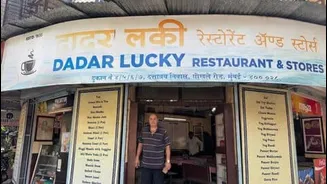
The escalating fuel expenses are not only affecting individual vendors but are also reshaping Mumbai's street food landscape. Hussein Ali, proprietor of Dadar Lucky Restaurant & Stores, despite being a restaurant owner rather than a street vendor, faces similar challenges. He has refrained from increasing his menu prices and routinely experiences sparse lunch service. Ali believes that while business owners absorb a minor hit to their profit margins, the true impact falls on their employees and daily wage earners, whose incomes are already precarious. Meanwhile, some vendors, like Sameem Ahmed at a sandwich stall in Nariman Point, have been compelled to implement price increases. A sandwich that once cost ₹20 now retails at ₹30, a hike that has deterred many customers. Ahmed notes a substantial loss of approximately 30% of his daily clientele, particularly among daily wage workers who are no longer able or willing to afford the increased prices, despite his stall's advantageous location near offices.
Survival vs. Closure
For numerous street food vendors in Mumbai, the current economic climate presents a stark choice between mere survival and outright closure. With no immediate prospect of relief from the escalating costs of commercial LPG cylinders, many small businesses are facing an untenable situation. They are being forced to consider either significant price increases, which risk alienating their customer base further, or scaling down their operations, which would inevitably diminish their capacity and reach. This difficult juncture threatens to fundamentally alter Mumbai's distinctive food economy, an ecosystem that has historically thrived on its accessibility and affordability. The current trend suggests a future where the vibrant, budget-friendly street food experiences that are so integral to the city's identity may become a rare commodity.