







From Theory to Reality
Fifteen years ago, concepts like artificial intelligence (AI) and machine learning (ML) were largely confined to theoretical discussions within the space
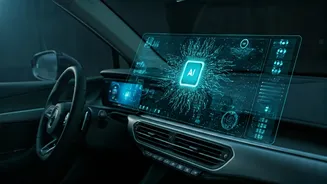
sector. However, the landscape has dramatically shifted, and these technologies are now considered indispensable necessities for the successful execution of space missions. ISRO Chairman Dr. V. Narayanan highlighted this profound transformation, emphasizing that what was once an academic subject has evolved into a critical requirement for current space endeavors. This evolution underscores the rapid advancement in computing capabilities and their practical application in the challenging domain of space exploration, moving beyond abstract ideas to tangible operational benefits that were previously unimaginable.
Chandrayaan 3's AI Backbone
The successful lunar landing of India's Chandrayaan 3 mission in August 2023 serves as a prime example of AI and ML's practical integration. The spacecraft was equipped with sophisticated sensors and cameras, enabling it to autonomously determine its precise location and velocity during the descent. This advanced system was pivotal in ensuring a safe and precise soft landing on the moon's surface. The incorporation of these intelligent systems allowed for a level of autonomy and efficiency in mission operations that was crucial for navigating the complex lunar environment, showcasing the tangible benefits of human-machine synergy in critical phases of space missions.
SMOPS Conference Insights
The International Conference on Spacecraft Mission Operations (SMOPS) has become a key platform for discussing these advancements. At the 2026 edition, AI, machine learning, space cybersecurity, and cloud-based systems were central to the dialogues. ISRO officials noted that the pivotal role of AI and ML in fostering more autonomous and efficient mission operations, through seamless human-machine collaboration, would be a recurring theme across various conference sessions. These discussions reflect a broader industry trend towards leveraging cutting-edge computing technologies to enhance every facet of space mission engineering, from initial design to long-term operational management.
Future of Mission Operations
The theme of the SMOPS conference, "Innovative Operations for Smart and Sustainable Space Mission Management – Next Generation," underscores the ongoing evolution of space mission operations. Unlike the brief operational window of launch vehicles, which typically last only 20 to 25 minutes, the ongoing operation of systems like communication satellites can span 15 years or more. This extended operational phase highlights the critical importance of robust and intelligent mission management. Furthermore, the conference agenda included discussions on crucial areas such as mission design, automation, managing large satellite constellations, human spaceflight programs like Gaganyaan, space robotics, policy development, and interplanetary exploration, all of which will increasingly rely on AI and ML.