





Pre-Poll Hotel Restrictions
In a significant pre-election measure, the Election Commission of India has issued a directive mandating hotels across West Bengal to refuse accommodation
to any individuals who are not residents of the specific constituency where polling is imminent. This restriction came into effect from 6 pm on Tuesday and is slated to remain in place until the conclusion of the voting process on Wednesday. This order has been particularly stringent in popular tourist locales such as Digha, Shankarpur, Tajpur, and Mandarmani, where authorities have unequivocally stated that only locals from the Ramnagar Assembly constituency will be permitted to stay in hotels. Niranjan Kumar, the East Midnapore District Magistrate and District Election Officer, confirmed that these coastal areas fall within the Ramnagar Assembly constituency and that all hotels in the district are now bound by the Election Commission's guidelines to deny lodging to non-residents, underscoring the importance of maintaining electoral integrity by limiting external presence.
Broader Implementation & Industry Concerns
The directive to restrict non-resident stays extends beyond the coastal tourist zones, with districts like Jalpaiguri also enforcing these regulations. Here, hotel owners have received formal notices from the police, referencing Section 126 of the Representation of the People Act, 1951, and the Election Commission's 72-hour Standard Operating Procedure (SOP). These notices explicitly prohibit any outsiders from being present in hotels during the final 48 hours preceding the polls. However, this broad implementation has sparked considerable apprehension among stakeholders in the hospitality sector. The Greater Siliguri Hotelier Welfare Association has formally reached out to the Chief Electoral Officer, seeking a clearer understanding of the order. While acknowledging the necessity of the Model Code of Conduct and enhanced security during elections, the association has highlighted significant operational difficulties. They pointed out that forcing guests to vacate could lead to considerable inconvenience for both hoteliers and their patrons. Furthermore, the association raised valid points regarding legal complexities and logistical challenges, especially concerning pre-booked events like family functions and corporate gatherings, many of which were arranged months in advance. The potential repercussions from prior commitments made via online booking platforms were also a cause for concern, prompting a plea for clarification on whether a formal notification mandates a complete hotel evacuation and a halt to all new guest check-ins in Siliguri.
Election Commission's Rationale
The Election Commission's guidelines, particularly under the Model Code of Conduct, do indeed provide for measures to restrict the presence of political figures and party workers from outside a constituency during the crucial last 48 hours before polling commences. The fundamental rationale behind these provisions is to meticulously prevent any form of undue influence or pressure on voters and to ensure that a truly level playing field is maintained once the official campaign period has drawn to a close. In line with this objective, district and police administrations are entrusted with the responsibility of ensuring that individuals who do not belong to the constituency depart after the campaign activities cease. The scope of these enforcement measures often includes inspections of community halls, lodges, and guesthouses to accurately identify and monitor any unauthorized outsiders. However, the recent broad application of these restrictions, encompassing all non-residents rather than specifically political operatives, has inevitably led to questions regarding the interpretation of these rules and whether the implemented measures are proportionate to the stated objective of ensuring fair elections.
Ancillary Election Measures
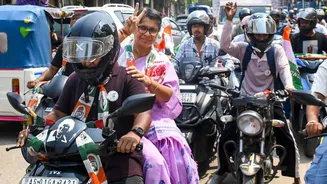
In addition to the hotel accommodation restrictions, the Election Commission has also implemented several other measures to ensure the smooth conduct of the upcoming high-stakes assembly elections in Bengal. Notably, the usual 48-hour ban on the sale and consumption of alcohol was significantly extended to 96 hours, commencing on Sunday. This prolonged dry period is a common tactic to prevent intoxication-related disturbances and maintain public order. Furthermore, the movement of motorbikes has been curtailed for two days leading up to the polling on April 23. Specifically, all motorbike movement is prohibited from 6 pm to 6 am, with exceptions made only for genuine emergencies or essential family needs. The commission has also explicitly stated that motorbike rallies will not be permitted. The assembly elections in West Bengal are being conducted in two distinct phases, with voting scheduled for April 23 and April 29, followed by the counting of votes on May 4, underscoring the multi-phase electoral process in the state.