


The Darkest Skies Unveiled
Nestled in the remote Changthang region of Ladakh, close to the Indo-China border, lies Hanle, a village renowned for its exceptionally dark night skies.
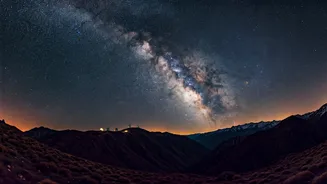
Situated at a breathtaking altitude exceeding 4,500 meters above sea level, this secluded locale is a stargazer's dream. Its isolation from urban sprawl means an almost complete absence of light pollution, allowing the Milky Way to be clearly visible to the naked eye. This pristine environment, characterized by barren mountains and vast, open landscapes, creates a unique canvas for astronomical observation. The minimal artificial lighting ensures that the celestial panorama remains unobstructed, offering an unparalleled viewing experience that draws astronomers and enthusiasts alike to this remote corner of India.
Cosmic Conditions Perfected
Hanle's allure for stargazing is amplified by a trifecta of environmental factors. The village boasts an extremely low level of artificial illumination, a stark contrast to light-polluted cities, making its skies exceptionally dark and thus ideal for deep-sky observations. Furthermore, the cold desert climate, coupled with a dry atmosphere and the significant high altitude, collectively contribute to remarkably clear visibility. These conditions facilitate clearer observation of stars, planets, dazzling meteor showers, and even faint distant galaxies, enhancing both scientific research and amateur skywatching. The region's commitment to preserving this natural wonder is underscored by its recognition as India's pioneering Dark Sky Reserve, a designation aimed at safeguarding the night sky and fostering responsible astro-tourism.
Observatory's High Perch
A significant contributor to Hanle's astronomical fame is the presence of the Indian Astronomical Observatory, managed by the Indian Institute of Astrophysics. Perched at an elevation of approximately 4,500 meters, this facility ranks among the highest astronomical observatories globally. Scientists utilize its advanced telescopes for in-depth studies of celestial bodies and to conduct crucial space research. The observatory's strategic placement was meticulously chosen due to the exceptionally dark skies and minimal atmospheric interference prevalent in the area. This location provides an optimal setting for capturing clear and detailed astronomical data, solidifying Hanle's importance in the scientific community.
Pioneering Dark Sky Reserve
Hanle has achieved significant international recognition following its official designation as India’s first Dark Sky Reserve. This landmark initiative was established to combat the growing threat of light pollution and to champion sustainable tourism practices within the region. The reserve implements strict regulations on the use of artificial lighting, actively encourages local communities to adopt eco-friendly lighting solutions, and vigorously promotes astro-tourism activities. Encompassing a substantial area around Hanle and its neighboring villages, this reserve cultivates one of the most outstanding night-sky viewing zones found across South Asia, offering an unparalleled experience for all who visit.
Astro-Tourism Flourishes
In recent times, Hanle has blossomed into a sought-after destination, attracting a diverse crowd including dedicated stargazers, passionate astrophotographers, avid astronomy enthusiasts, and adventurous travelers. Visitors frequently spend their evenings immersed in the spectacle of constellations, planets, and the majestic sweep of the Milky Way across the unpolluted Himalayan firmament. The viewing experience reaches an even more profound level during the new moon phase, when the darkness is at its absolute peak. The region is also witnessing a rise in astro-tourism festivals and organized sky observation camps, further enhancing its reputation as a premier hub for celestial exploration.
Optimal Visit and Access
The most opportune time to experience Hanle's celestial wonders is between May and September. During these months, the challenging mountain roads are generally more accessible, and the weather conditions are conducive to both travel and effective night-sky observation. Winter in Hanle presents a formidable challenge, with temperatures plummeting far below freezing, making it less suitable for casual visitors. Hanle is situated approximately 250 kilometers from Leh and is accessible by road, typically requiring a journey via Nyoma after securing the necessary Inner Line Permit, given its proximity to the international border. Due to its remote nature, meticulous travel planning and adequate acclimatization are strongly advised to mitigate potential altitude-related health concerns.