







Deal Finalization Timeline
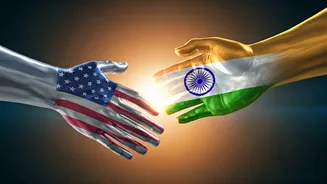
The Indian government is actively working to transform the current understanding on trade with the United States into a legally binding interim agreement,
with an ambitious target of concluding and signing the document before the end of March. Commerce Secretary Rajesh Agrawal highlighted that a joint statement has already established the broad outlines of this deal. The immediate next step involves translating these general understandings into concrete, operational terms within a formal legal document. While expressing confidence in meeting the March deadline, Agrawal acknowledged that the intricate process of legal drafting, ensuring it satisfies the requirements of both nations, can be time-consuming. Nevertheless, continuous engagement between the teams from both countries is ensuring progress towards this crucial March target for operationalizing the agreement. This effort signifies a strong commitment to deepening the economic partnership between India and the US, paving the way for increased bilateral trade and investment.
Sectoral Benefits and Tariffs
The impending trade pact is expected to offer substantial advantages, particularly to India's labor-intensive industries, which are well-positioned to expand their presence in the United States market without encountering undue disruptions. Agrawal addressed potential concerns regarding a proposed 18% tariff ceiling, asserting that it remains competitive given that similar regional competitors face even higher tariffs. He explained that when tariffs are ultimately borne by consumers and industries, India's proposed ceiling ensures its exporters maintain a competitive edge and secure sustained market access. Furthermore, the agreement is anticipated to help Indian businesses recover lost ground in global supply chains, especially after missing key seasonal demand periods like Christmas. This pact is poised to not only sustain the steady growth witnessed in Indian exports recently but also to foster further expansion across various sectors, reinforcing India's position in global trade.
Protecting Sensitive Sectors
In its trade negotiations, India has maintained a firm stance on safeguarding sectors that are vital to the livelihoods of its farmers, fishermen, and rural communities. Agrawal emphasized that areas directly impacting these groups will not be indiscriminately opened up. He drew parallels to five recent trade agreements concluded by India, where sensitive sectors were consistently protected. Even in instances where limited market access was conceded, India strategically employed mechanisms like Tariff Rate Quotas (TRQs). These quotas are designed to control the volume of imports, ensuring that domestic producers are not negatively impacted by sudden influxes of foreign goods. This approach underscores India's commitment to balancing its international trade commitments with the imperative of supporting its domestic agricultural and fishing economies, ensuring that economic liberalization does not undermine the well-being of its most vulnerable populations.
Industry Endorsement and Global Context
The interim agreement has garnered positive feedback from Indian industry stakeholders, reflecting a broad consensus on its balanced nature. Extensive consultations with relevant government ministries and various businesses were conducted throughout the negotiation process, ensuring that diverse perspectives were incorporated. The industry has broadly welcomed the outcome, with Agrawal noting that the pact represents a favorable resolution for India in an international landscape increasingly characterized by reciprocal tariffs. He indicated that there are no significant 'red lines' crossed in the agreement, suggesting a pragmatic and mutually beneficial arrangement. This positive reception highlights the successful negotiation of a deal that addresses key concerns while advancing economic cooperation, positioning India favorably in the global trade environment.
Export Performance and BIOFACH Presence
India's export performance remains robust across both merchandise and services trade, with the services sector exhibiting particularly strong growth. While awaiting official data for January, preliminary indications suggest a continued positive trend. India is also making a significant statement on the international stage at BIOFACH 2026 in Nuremberg, Germany, where it is honored as the Country of the Year. This prestigious platform is being utilized to showcase the nation's burgeoning organic sector. The Indian presence is marked by a substantial pavilion spanning 1,074 square meters, featuring 67 co-exhibitors. These participants represent a diverse array of businesses from over 20 Indian states, collectively highlighting the breadth and depth of India's organic produce and agricultural innovations to a global audience.