




Mountain Ghost: Snow Leopard
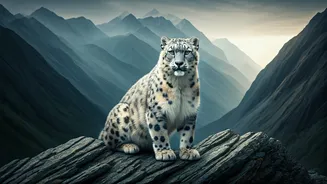
Perched high in the formidable mountain ranges of Central and South Asia, including the iconic Himalayas, the snow leopard is a master of concealment.
Its smudged, grey coat, adorned with dark rosettes, provides near-perfect camouflage against the rocky, windswept terrain it calls home. These magnificent cats are solitary and move with silent grace, preferring the rugged, inaccessible slopes far from human presence. Their elusive nature means that even dedicated researchers might spend extended periods searching without a direct glimpse, making every photographic record an invaluable contribution to conservation efforts and a testament to their elusive existence.
The Asian Unicorn: Saola
Revered as the 'Asian unicorn,' the saola stands out as one of the planet's most exceptionally rare large mammals. Its scientific discovery is remarkably recent, dating back to 1992 in the dense forests of Laos and Vietnam. Distinguishable by its elegant, straight horns and striking white facial markings, the saola possesses an almost mythical aura. Precious few individuals have ever been observed alive in their natural environment, and none are currently known to exist in captivity. The continuous threats of habitat destruction and hunting have further amplified its scarcity, deepening its enigmatic reputation and making encounters extraordinarily uncommon.
Forest Enigma: Okapi
Residing exclusively within the dense, emerald rainforests of the Democratic Republic of Congo, the okapi presents a unique appearance, often likened to a blend of zebra and giraffe, to which it is indeed the closest living relative. This creature is inherently timid and prefers to remain hidden. Its dark, velvety fur allows it to melt seamlessly into the shadows of the forest, while its distinctive striped legs serve as a clever deterrent against predators. Due to its secluded habitat and its natural inclination to avoid human contact, the okapi remained unknown to Western science until the early twentieth century, underscoring its reclusive lifestyle.
Scaled Secret: Pangolin
The pangolin, an extraordinary mammal encased in protective keratin scales, is one of the world's most unusual and difficult-to-find animals. Primarily active at night, it leads a highly secretive life, and when faced with danger, it instinctively curls into a tight, impenetrable ball. Found across both Africa and Asia, these fascinating creatures spend the majority of their time concealed within burrows or beneath the dense cover of forests. Tragically, their distinctive scales make them highly sought after in the illegal wildlife trade, significantly reducing the opportunities for witnessing them in their natural settings and exacerbating their rarity.
Cold Climate Cat: Amur Leopard
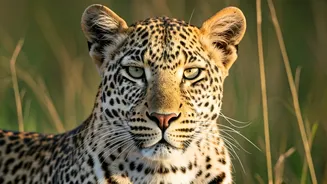
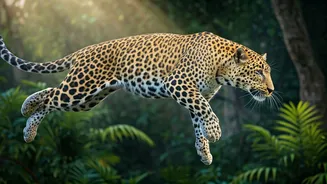
Considered one of the most critically endangered big cats on Earth, the Amur leopard inhabits the forested regions of the Russian Far East and northeastern China. Uniquely adapted, this leopard thrives in cold, snowy environments, unlike many of its counterparts. Its hunting activities are predominantly nocturnal, and it roams across vast territories, which makes any encounter exceptionally rare. With estimated populations of fewer than a few hundred individuals remaining in the wild, spotting an Amur leopard is an exceedingly rare event, even for seasoned wildlife professionals and researchers dedicated to its survival.
Nocturnal Primate: Aye-Aye
Hailing from the island of Madagascar, the aye-aye is a distinctive nocturnal lemur characterized by its unusual appearance, large eyes, ears reminiscent of a bat's, and a remarkably elongated middle finger. This specialized digit is used to tap on tree trunks, listening for insect larvae and then extracting them. Its strictly nocturnal habits and its preference for deep forest environments mean that sightings are infrequent. Furthermore, local folklore and superstitions surrounding the aye-aye have, in some areas, led to its persecution, further contributing to the scarcity of observations and reinforcing its elusive status.
Flightless Parrot: Kakapo
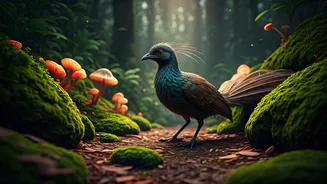
The kakapo, a substantial, flightless parrot native to New Zealand, ranks among the rarest avian species globally. This bird is primarily active at night, spends its life on the ground, and exhibits an extremely timid disposition. Unlike the vibrant plumage typically associated with parrots, the kakapo's feathers are a mossy green, providing exceptional camouflage within its forest surroundings. Conservationists maintain close oversight of every surviving individual, and opportunities for observation are generally restricted to the scientists actively engaged in recovery initiatives for this unique species.
Deep Sea Titan: Giant Squid
Few creatures embody mystery as profoundly as the giant squid. Dwelling in the abyssal depths of the ocean, often thousands of feet below the surface, this colossal marine inhabitant remained largely the stuff of legend for centuries. The majority of our understanding stemmed from deceased specimens that washed ashore or were discovered within the stomachs of whales. It was only in relatively recent times that scientists succeeded in capturing images of these magnificent creatures alive in their natural, deep-sea environment, solidifying their status as among the planet's least observed animals.