






Accelerating Towards the Future
India's railway infrastructure is undergoing a significant evolution, with an increasing focus on enhancing travel speeds and passenger experience. By
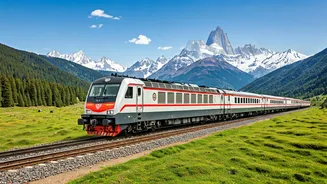
2026, a fleet of advanced semi-high-speed and high-speed trains are set to redefine intercity connectivity, promising reduced travel durations and elevated comfort. These modern marvels are not just about reaching destinations quicker; they represent a leap forward in safety, efficiency, and the overall quality of journeys undertaken by millions. Many of these trains have already captured the imagination and loyalty of frequent travelers, becoming synonymous with swift and reliable transit between the country's major urban centers. The introduction of these faster trains signifies a commitment to modernization and improved accessibility across the vast Indian subcontinent.
Vande Bharat Express: A National Pride
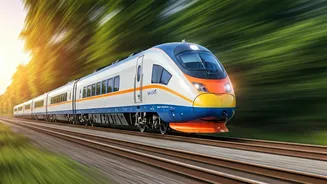
The Vande Bharat Express, affectionately known as Train 18, stands as India's premier high-speed train. It boasts an impressive maximum operational speed capability of 180 km/h, though it typically operates at a still-swift 160 km/h on many operational routes. This state-of-the-art train is a testament to India's manufacturing prowess, being fully 'Make in India'. Passengers can expect a travel experience replete with contemporary amenities, designed for both speed and comfort. Its advanced design and features set a new benchmark for rail travel within the country, offering a glimpse into the future of efficient and high-speed public transportation.
Gatimaan Express: The Pioneer
As India's inaugural semi-high-speed train, the Gatimaan Express holds a significant place in the nation's rail history. Connecting Hazrat Nizamuddin in Delhi with Agra, this train is engineered to reach speeds of up to 160 km/h. Its primary purpose is to cater to travelers journeying to popular tourist destinations, offering them a faster and more convenient way to experience India's rich cultural heritage. The Gatimaan Express has successfully demonstrated the viability of semi-high-speed rail in bridging distances between key cities, particularly those with significant tourist appeal, enhancing the overall travel ecosystem for visitors.
Tejas Express: Speed Meets Comfort
The Tejas Express distinguishes itself through a harmonious blend of rapid transit and exceptional passenger comfort. While its design allows for a maximum velocity of 150 km/h, it consistently operates at speeds around 130 km/h during its regular services. This train is highly regarded for its immaculate interiors and a comprehensive suite of onboard facilities, ensuring a pleasant and productive journey for all passengers. The Tejas Express has become a preferred choice for those seeking a superior travel experience, combining efficient travel times with amenities that elevate the standard of rail commuting.
Bhopal Shatabdi's Pace
The New Delhi-Bhopal Shatabdi Express remains a formidable contender among India's fast-paced train services. It is permitted to operate at a top speed of approximately 150 km/h. Beyond its speed, the Shatabdi Express is celebrated for its remarkable punctuality, a trait highly valued by its passengers. It consistently maintains a strong average speed throughout its route, making it a reliable and efficient option for travel between these two major cities. Its enduring legacy is built on consistent performance and a commitment to timely arrivals.
Rajdhani Express Connectivity
The Mumbai–New Delhi Rajdhani Express exemplifies efficient long-distance travel within India's rail network. This premier train operates at a maximum speed of about 140 km/h, effectively connecting two of the country's most vital economic hubs. It serves as a crucial and dependable link for overnight journeys, providing a comfortable and timely transit option for thousands of passengers. The Rajdhani Express continues to be a cornerstone of intercity rail travel, symbolizing connectivity and reliability for both business and leisure travelers.
Infrastructure for Speed
Achieving higher speeds in rail travel necessitates robust infrastructure, and Indian Railways is continuously investing in upgrading its tracks and safety systems. Enhanced track quality, advanced signalling technology, and stringent safety protocols are paramount to supporting and maintaining higher operational velocities. These ongoing improvements are critical for ensuring passenger safety while enabling trains to run at their maximum potential speeds. The commitment to infrastructure development underscores India's dedication to building a modern and secure railway network capable of meeting the growing demand for faster, more reliable transportation.
The Evolving Rail Landscape
With an ever-increasing demand for swift travel solutions, the role of faster trains in India's public transportation system is becoming increasingly indispensable. Passengers can anticipate further enhancements, with more routes likely to be approved for higher speeds in the near future, leading to significantly reduced journey times. This ongoing transformation signifies a clear trajectory towards a more rapid and dynamic railway future for the nation. The continuous introduction of faster trains and the improvement of associated infrastructure are shaping a new era of rail commuting, making distances feel shorter and travel more accessible than ever before.