




Daintree: Earth's Oldest Tropical
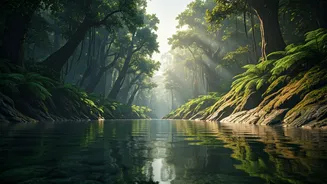
Venture into the Daintree Rainforest in Australia, a natural wonder estimated to be a staggering 180 million years old. This ancient tropical ecosystem
predates dinosaurs and showcases a remarkable array of primitive plant species, offering a profound connection to Earth's deep past. Its sheer age and unique biodiversity make it a living testament to the planet's evolutionary journey, allowing visitors to walk through a landscape largely unchanged for eons. The Daintree is more than just a forest; it's a biological treasure trove holding secrets from a time long before humanity walked the Earth, a rare opportunity to experience a truly primeval environment.
Borneo's Rich Tapestry
Explore the ancient Borneo Lowland Rainforest, a sprawling ecosystem estimated to be around 130 million years old, spanning parts of Malaysia, Indonesia, and Brunei. This region is renowned for its extraordinary richness, harboring iconic wildlife such as orangutans and pygmy elephants within its dense, ancient foliage. The forest's immense age has allowed for the development of a complex and vibrant web of life, making it one of the most significant biodiversity hotspots on the planet. Walking through Borneo's ancient forests offers an immersive experience into an ecosystem that has evolved over millions of years, providing vital habitat for species found nowhere else.
Taman Negara's Pristine Trails
Discover Taman Negara, a rainforest consistently ranked among the world's most ancient, with an age exceeding 130 million years. This remarkably preserved ecosystem invites exploration through its dense jungle paths and exciting canopy walkways, offering a unique perspective on its lush environment. Its longevity has fostered a pristine natural state, where the intricate balance of flora and fauna has remained largely undisturbed. Taman Negara provides an unparalleled opportunity to connect with a truly ancient forest, experiencing its wild beauty and the remarkable biodiversity it supports through an intimate exploration of its trails.
Amazon: A Biodiverse Giant
While younger than some of its ancient counterparts at over 55 million years old, the Amazon Rainforest remains unparalleled as the largest and most biodiverse jungle on Earth. Its sheer scale and the immense variety of life it harbors are awe-inspiring. This vast ecosystem is a critical global resource, supporting countless species of plants, animals, and insects, many of which are still undiscovered. Exploring the Amazon offers a profound sense of its vital importance, showcasing a dynamic and incredibly rich natural world that has evolved over millions of years into a truly magnificent spectacle of life.
Yakushima's Mystical Cedars
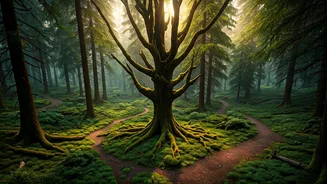
Journey to Yakushima Forest, a place of enchanting beauty, famous for its ancient cedar trees, some dating back over 7,000 years. Draped in moss and often shrouded in mist, this Japanese island forest evokes a surreal, almost mythical atmosphere, famously inspiring cinematic masterpieces like 'Princess Mononoke'. The profound age of its trees, combined with the ethereal environment, creates an experience of stepping into a living fairy tale. The forest's resilience and enduring presence over millennia are a powerful reminder of nature's enduring magic and its ability to inspire awe and wonder.
Bristlecone's Resilient Pines
Visit the Ancient Bristlecone Pine Forest, a rugged and awe-inspiring landscape in California that is home to some of the oldest living trees on our planet, with individuals exceeding 5,000 years of age. These remarkable trees are a testament to incredible resilience, having adapted and thrived in harsh, extreme climates for millennia. The stark beauty of this forest, coupled with the immense age of its inhabitants, offers a powerful visual metaphor for endurance and the slow, persistent passage of time. It's a place where the sheer tenacity of life in the face of adversity is profoundly evident.
Caspian Hyrcanian Relics
Step into the Caspian Hyrcanian Forests, a remarkable ecological relic dating back an astonishing 25 to 50 million years, which once stretched across a significant portion of the Northern Hemisphere. These lush, verdant woodlands represent a vital link to ancient ecosystems, harboring unique flora and fauna that have adapted over vast geological timescales. Their survival as a contiguous forest provides an invaluable glimpse into prehistoric environments and the evolutionary history of the region. Exploring these forests is like traversing a living museum, showcasing the enduring power of nature across epochs.
Reunion's Volcanic Forests
Discover the unique ancient ecosystem of Reunion National Park, a relatively younger yet captivating forest ecosystem that emerged around 2 to 2.5 million years ago. What sets this park apart is its dramatic volcanic terrain, intricately woven with dense, ancient forests. This striking combination of geological activity and established woodland creates a landscape of unparalleled beauty and ecological significance. The park offers a glimpse into how forests establish and thrive in dynamic, geologically active environments, presenting a different facet of ancient natural history.
Western Ghats' Ancient Biodiversity
The Western Ghats, an ancient mountain range over 150 million years old, cradle some of the world's most vital and biodiverse forests. Particularly in states like Kerala and Karnataka, these dense evergreen stretches form exceptionally rich ecological zones, teeming with countless endemic species. This region is a treasure trove of rare wildlife, invaluable medicinal plants, and unique flora found nowhere else on Earth, a direct result of its ancient origins and isolation. The forests here are not just old; they are crucial reservoirs of life, representing a unique evolutionary pathway.
Sundarbans: Evolving Mangroves
While geologically younger, the Sundarbans Mangrove Forest represents an ancient evolutionary success story, standing as one of the world's oldest mangrove ecosystems. This dynamic, shifting forest, intricately shaped by the rhythm of the tides, is a rare and precious example of a living, adapting environment. Its unique ecological character and the resilience of its mangrove inhabitants showcase nature's ability to thrive in challenging intertidal zones. Visiting the Sundarbans offers a unique perspective on the ancient processes that continue to shape this extraordinary and vital coastal wilderness.