


Shaheen Bagh's Ramadan Pulse
Delhi, a metropolis steeped in diverse cultures, truly embodies a cosmopolitan spirit. The sacred month of Ramadan offers a profound opportunity to delve
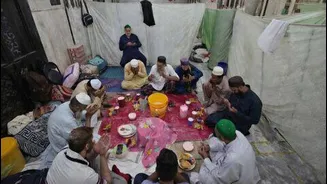
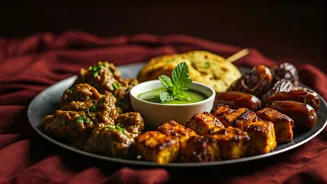
into its culinary traditions beyond mere academic knowledge. My experience took an enriching turn with food author Sadaf Hussain, whose expertise illuminated the historical context and the nuanced art of spice balance in various dishes. While the lanes around Jama Masjid in Old Delhi are traditionally known for their Ramadan offerings, Shaheen Bagh in South Delhi presents a distinct narrative. This area, which gained prominence during the CAA-NRC protests where local women spearheaded a peaceful demonstration, evolved into a communal space for shared meals and conversations. The 'chaalis-foota road,' as locals call it, transformed into a bustling food hub, especially after the lockdown, drawing people with its array of food stalls and eateries. This transformation from quiet residential areas to a lively food street offered a magical transition, reminiscent of Old Delhi but with its own South Delhi charm. The synchronized preparation for Iftar, the evening meal to break the fast, was a captivating sight, with shopkeepers setting up communal tables laden with fruits, sharbats, dates, and fritters, extending an invitation to all—staff and passersby alike—to share in the breaking of the fast.
The Rhythms of Ramadan Meals
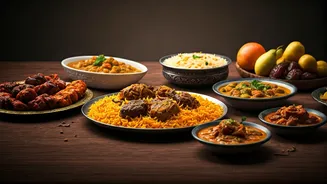
Ramadan's culinary landscape is defined by two distinct meal periods: Sehri before dawn and Iftar at sunset. Sadaf Hussain explained that Sehri can range from simple fare like bun and jam with tea to regional specialities like Hyderabad's khichdi and khatta or Lucknow's unique spreads, showcasing the diverse gastronomic traditions across India. Many Iftar favourites, including biryani, shawarma, kebabs, and nihari, often remain available through the night for those observing Sehri. The science behind Sehri meals emphasizes sustained energy and hydration, favouring heavy carbohydrates, a touch of sweetness, and liquids to create 'slow-burning' foods that fuel the body throughout the day. In contrast, Iftar follows a specific sequence: beginning with dates for a sugar boost, followed by water or sharbat, then snacks, and finally progressing to more substantial dishes. The breaking of the fast is marked by a gentle shift in atmosphere, with conversations quieting and a palpable sense of gratitude as people partake in their first sustenance after hours of fasting.
Chapli Kebab: A Flavorful Journey
Venturing further down the lane, the enticing aroma of kebabs led to a stall preparing Chapli Kebabs. Hussain elucidated that the name 'Chapli' derives from 'chappal' (slipper) due to the patty's flat shape. Unlike melt-in-your-mouth kebabs, Chapli Kebabs are intentionally crafted to retain a satisfying texture, a characteristic favoured by Delhiites. These are part of the 'kacche keema' (raw minced meat) family, where the meat is pounded with spices before cooking, reflecting the culinary practices of mountainous regions where simplicity and readily available masalas were key. Hussain noted regional variations, with the Peshawari version being more robust and the Afghani style slightly milder and fattier, expressing a personal preference for the latter. The specific stall's cook had honed his skills making authentic Peshawari kebabs in Dubai before bringing those flavours to Shaheen Bagh, making each kebab a culinary journey from Peshawar to Dubai and finally to Delhi.
Ande ka Halwa: Sweet Surprise
A delightful and unexpected discovery during the food walk was Ande ka Halwa, a dessert that initially sounded unconventional. However, a single taste dispelled any doubts. Hussain shared that this recipe has been a cherished family heirloom, passed down from his paternal grandmother. The preparation, though requiring simple ingredients like ghee, milk, sugar, and eggs, demands a patient cooking process of at least 40 minutes, ensuring it's distinct from scrambled eggs. The resulting dessert, akin to a milk cake in both its consistency and flavour, offered a sweet conclusion to the culinary exploration. This experience underscored how street food acts as a gateway, fostering a sense of inclusivity and shared celebration through flavours, stories, and traditions. Amidst the vibrant sounds and enticing aromas, Shaheen Bagh transformed from a mere marketplace into a symbol of shared community, generosity, patience, and unity, perfectly encapsulated in the spirit of each Iftar.