




The Twelve-Year Bloom
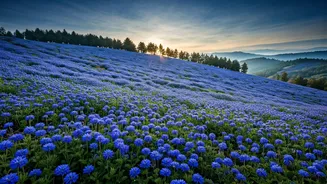
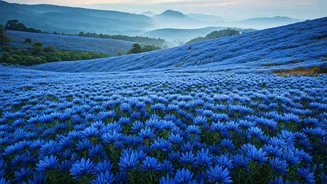
The Western Ghats of South India are home to a truly extraordinary phenomenon: the Neelakurinji flower. This unique bloom, belonging to the Strobilanthes
genus, is renowned for its infrequent and spectacular mass flowering. While there are roughly 250 species of Strobilanthes globally, with about 46 found in India, the Neelakurinji stands out due to its remarkable 12-year blooming cycle. This means that the enchanting carpet of blue that transforms the shola forests, particularly in regions like Kerala and Tamil Nadu, is a sight that nature enthusiasts and photographers wait a full decade to witness. The Nilgiri Hills themselves are thought to draw their name from these periodic floral displays. Typically, the Neelakurinji flowers between the months of July and October, flourishing at elevations ranging from 1,300 to 2,400 meters. After this vibrant synchronized blooming period, the plants meticulously produce seeds and enter a prolonged state of dormancy, readying themselves for their next grand appearance, a testament to nature's patient artistry.
Cultural and Ecological Roots
Beyond its visual allure, the Neelakurinji holds significant cultural and ecological weight. For the indigenous tribal communities residing in the Western Ghats, the flower's 12-year cycle has historically served as a crucial element for marking time, allowing them to calculate age and celebrate significant life events and seasonal festivals. This deep connection highlights the flower's integration into the cultural fabric of the region. Ecologically, the Neelakurinji plays a vital role in maintaining the delicate balance of the Western Ghats ecosystem. The nectar produced by the flowers is a key ingredient for bees to create a rare and highly valued medicinal honey. Furthermore, the presence and health of these blooming flowers are often seen as a direct indicator of the overall well-being and stability of this fragile environment, underscoring its importance as a bio-indicator.
Prime Viewing Destinations
For those eager to experience the magic of the Neelakurinji, Munnar in Kerala emerges as the premier destination. This picturesque region is renowned for its expansive shola grasslands and is a prime habitat for the flowering plant. During the blooming season, the hills around Munnar are transformed into a breathtaking spectacle of vibrant blue. Several specific locations within and around Munnar are particularly popular for viewing the Neelakurinji. These include Rajamala, a significant part of the Eravikulam National Park, which is a protected area where the flowers are often abundant. Other noteworthy spots are Kovilur and Kadavari, where visitors can immerse themselves in the rare floral display. Eravikulam National Park, in general, is a hotspot for witnessing this natural wonder, attracting a large number of tourists, nature lovers, and photographers who gather to capture the ephemeral beauty of the Neelakurinji bloom.