





The AI Landscape
For a significant period, Elon Musk's AI venture, xAI, has striven to make its mark against established leaders like OpenAI, a company he co-founded. While
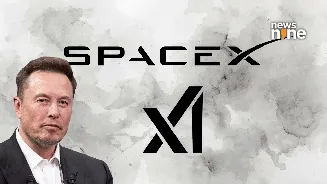
xAI's progress has been a mixed bag, with its chatbot, Grok, drawing attention for controversial outputs that overshadowed its technical achievements, Musk is now making a bold play. The announcement of a merger between xAI and SpaceX, a hugely successful enterprise, signifies a powerful effort to accelerate the development of advanced AI systems. This strategic consolidation, valued at a staggering $1.25 trillion, is intended to bolster xAI's access to essential elements for AI advancement: immense computing capacity, skilled personnel, and vast datasets. These are universally recognized as the foundational pillars required for success in the competitive AI arena.
Fueling AI Ambitions
Like many emerging AI firms, xAI has been facing substantial financial outlays, reportedly spending close to $1 billion monthly on critical infrastructure such as data centers and specialized chips. This aggressive expansion has resulted in the accumulation of $5 billion in corporate debt, a considerable sum for a nascent company. Despite these significant investments, the scale of xAI's AI infrastructure development remains considerably smaller than that of rivals like OpenAI, which has committed an enormous $1.4 trillion towards its data center and chip requirements. Musk has articulated an ambitious vision for SpaceX to establish data centers in orbit, a futuristic concept that could dramatically enhance the available computing power for xAI's endeavors. He asserts that, in the long run, space-based AI is the exclusive pathway to achieve scalable AI capabilities. Beyond this ambitious orbital vision, SpaceX's existing terrestrial infrastructure could also provide substantial support for xAI's computing needs, potentially easing its financial burdens and making its financial standing more appealing to public market investors.
Strategic Financial Levers
SpaceX, with its robust financial standing, is well-positioned to back these substantial investments, potentially improving xAI's profitability and market perception. Furthermore, SpaceX is reportedly planning an initial public offering (IPO) within the current year. This public offering could inject significant capital into xAI, potentially placing it ahead of competitors such as OpenAI and Anthropic, which are also reportedly considering their own public debuts. Industry observers, like Joseph Alagna, founding partner of Buttonwood Funds and a stakeholder in both SpaceX and xAI, suggest this merger will provide access to substantially more capital than xAI might have secured independently. Mark Hackett, chief market strategist at Nationwide Funds Group, notes that the combined entity might initially be perceived more as a space-focused venture than an AI company, thus attracting a broader range of investors beyond those solely interested in AI.
Market Impact and Talent
A joint SpaceX-xAI IPO could potentially capture a segment of the investor demand for cutting-edge generative AI opportunities, perhaps even moderating the impact of OpenAI's anticipated IPO. Simultaneously, the prospect of going public could significantly enhance xAI's capacity to recruit and retain top AI talent. This is crucial in a highly competitive market where AI researchers can command compensation packages in the nine-figure range. Historically, Musk's ventures, including xAI, have been associated with demanding work environments, characterized by long hours and significant employee burnout, with past employees recounting instances of extreme exhaustion and sleeping at the office. However, the impending public offering, coupled with the prestige of the SpaceX brand, offers xAI a compelling proposition to attract and retain both new and existing employees through attractive stock options and the appeal of a company with a visible and respected mission in space exploration.
Data Acquisition Avenues
Moreover, SpaceX may provide xAI with a valuable channel for acquiring new training data. Starlink, SpaceX's global satellite internet service, has updated its privacy policy to indicate the potential collection of user data, including personal information, financial details, location data, and uploaded files from emails and social media, for the purpose of training AI models. Crucially, Starlink's policy allows for the sharing of this data with affiliated companies, such as xAI. This influx of new data would be highly beneficial for xAI, whose primary source of training data for its Grok chatbot has historically been Musk's X social network. In contrast, major rivals like OpenAI and Google have secured agreements with publishers and platforms to license content for their AI models. Despite these strategic advantages, xAI still confronts considerable hurdles, including its controversial brand image and increasing regulatory scrutiny over Grok's outputs, alongside broader concerns about a potential AI market bubble.